Picture the kind of week that’s unfolding across Southern California right now. It’s been over 90°F for days, with no real break at night. Somewhere not too far off, a wildfire is burning through brush that hasn’t seen fire in decades, and the forecast keeps mentioning wind gusts that could push it further. And then there’s the other thing sitting in the back of your mind: your utility company might shut your power off on purpose, before anything has even caught fire near you, because the conditions are dangerous enough that they don’t want to risk their own lines sparking the next one.
That’s not a hypothetical. It’s what Southern California is living through this week: a multi-day heat wave well above normal for October, a fast-moving wildfire near Santa Clarita, and utilities warning tens of thousands of customers that their power may be shut off on purpose. (Details, with sources, are in What’s Happening This Week below.)
I’m not writing this to alarm anyone about that specific fire or that specific heat wave, and I don’t know anyone’s personal situation in Santa Clarita or Riverside County. This isn’t a news post. What I want to walk through is the pattern underneath it, because a heat wave, a nearby wildfire, and a planned power shutoff aren’t three separate risks that happen to show up the same week. They’re one connected weather pattern, and if you live anywhere in California, Oregon, or Washington, you’ll see a week shaped like this one again. Preparing for it as a single scenario, rather than three unrelated “someday” problems, is the useful move, and it’s what the rest of this guide covers.
Quick Verdict: What to Shore Up First
Keeps phones and medical devices running and a fridge cold for part of each day, with no fuel or fumes. My full backup power guide.
The right call for smoke exposure for almost everyone: not a full gas mask. Here’s when you’d need more.
An evacuation warning is the wrong time to start packing. My go-bag guide covers what belongs in it.
Free Updates
I send an email when something’s genuinely worth your time: a new guide, a real price drop on something I recommend, or an actual safety alert. No spam, no daily digest, unsubscribe anytime.
What’s Happening This Week
As of early October 2026, Southern California is in the middle of a multi-day heat wave, with National Weather Service heat warnings covering more than 34 million Californians and highs of 92–105°F along the coastal plains. The Weather Service has flagged a “high risk of large and fast-moving fires” in SoCal valleys and mountains, with wind gusts up to 50 mph, and forecasts the pattern persisting from Friday, October 2 through at least Thursday, October 8.
On Saturday, October 3, the Bouquet Fire ignited in the Angeles National Forest near Santa Clarita and Castaic, in an area that hadn’t burned in several decades and was carrying very heavy, dry brush. By that night it had grown to roughly 1,044 acres with 30% containment, prompting mandatory evacuation orders for some zones and evacuation warnings for others, and threatening structures and power lines. Nearly 300 firefighting personnel responded, and no injuries or deaths have been reported. As of October 5, containment had risen to about 48%, though some evacuation orders and warnings remained in place (ABC7 Los Angeles).
Separately, utilities across the region have been weighing Public Safety Power Shutoffs ahead of and during the heat wave: Southern California Edison flagged roughly 9,990 customers in Riverside County, and San Diego Gas & Electric flagged more than 35,000 customers in at-risk foothill communities, while the state’s grid operator projects electricity demand pushing toward record October highs as air conditioning use surges.
Why This Matters Even If You’re Not in Southern California
It’s tempting to read all of that as a regional story. It isn’t, really. Planned power shutoffs tied to fire risk are now a standard tool for utilities across California, and increasingly in Oregon and Washington, every fire season. If you live anywhere with dry summers, Santa Ana-style wind events, or utility lines running through forested or brush-covered terrain, this is a “when,” not an “if.”
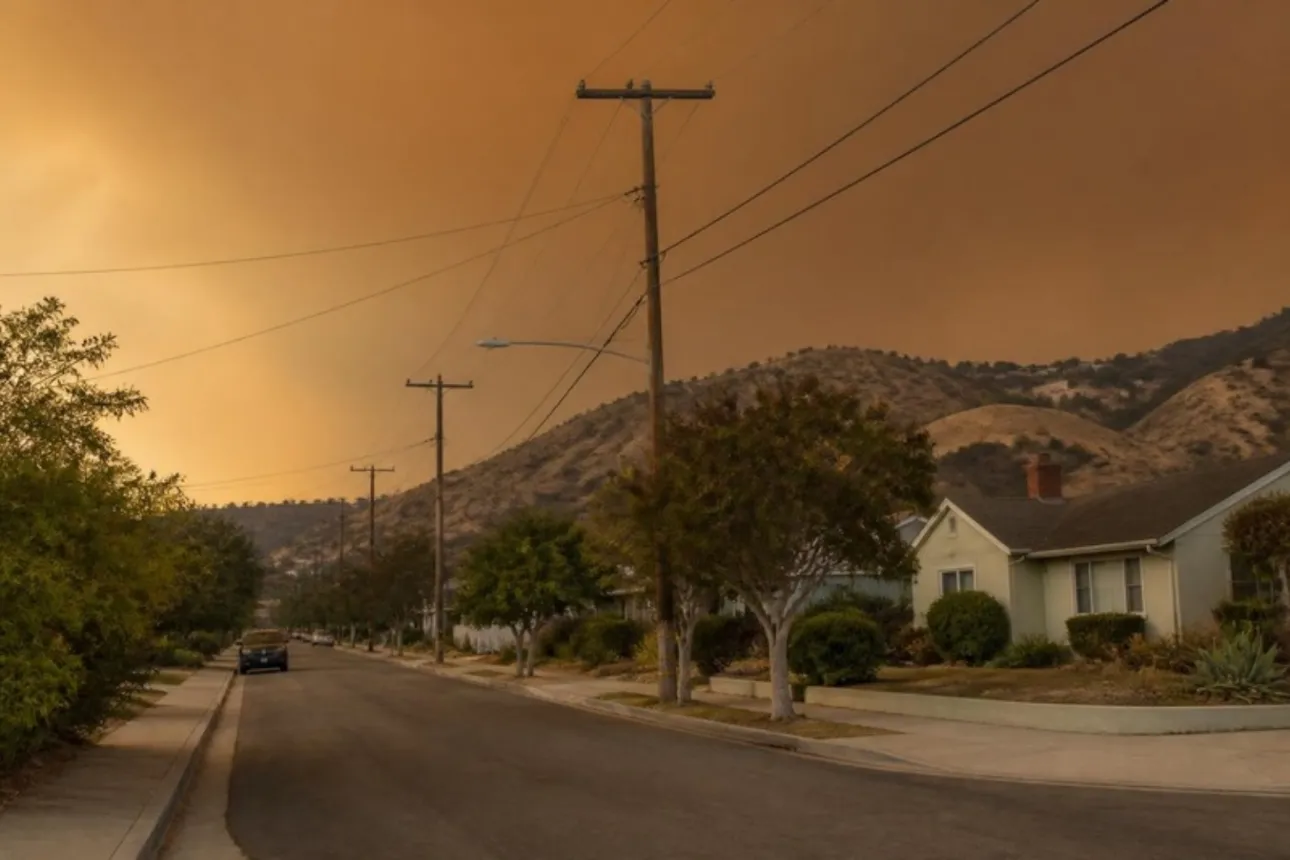
The honest reason to read a checklist like this now, rather than during the next event, is that a shutoff warning typically gives you somewhere between a few hours and a couple of days of notice, which is either plenty of time to prepare or almost none, depending entirely on whether you’ve already thought it through.
What Is a Public Safety Power Shutoff, Exactly?
A Public Safety Power Shutoff (PSPS) is a deliberate, planned outage. A utility proactively cuts power to specific circuits when conditions line up for wildfire risk (typically high heat, low humidity, strong wind, and dry vegetation all at once) because under those conditions their own power lines and equipment can spark a new fire if something fails or a branch makes contact.
That’s the key difference from a storm-damage blackout. A PSPS isn’t an accident the utility is scrambling to fix; it’s a choice made ahead of time, based on weather forecasting, and it’s usually communicated in advance through utility alerts, county emergency notifications, and public outage maps. It also means a PSPS can run anywhere from a few hours to several days, since power generally isn’t restored the moment the wind dies down: crews often need to physically inspect de-energized lines for damage first.
- It’s forecastable. Utilities typically flag the possibility of a shutoff days ahead, the way SCE and SDG&E have already done this week for tens of thousands of customers.
- It’s published. Utilities maintain live outage maps and SMS/email alert systems specifically for PSPS events.
- It’s a choice, not a failure. Nothing broke. The utility turned the power off specifically so nothing would.
- It can happen even without fire or smoke nearby. Your circuit doesn’t need an active fire close by to be included; it only needs to sit in a flagged risk zone during the right weather.
The PSPS Checklist, by Situation
Not every power shutoff deserves the same response. This is the table I’d want pinned to my fridge: scan down to whichever column matches where things stand right now, and skip the rest.
| Category | Shutoff lasts a few hours | Outage lasts 1–2+ days | You’re told to evacuate |
|---|---|---|---|
| Power | Charge phones/laptops now; unplug sensitive electronics | Rotate backup battery use; run a power station for fridge/medical devices on a schedule | Grab a portable power bank and chargers; leave larger backup gear if time is short |
| Water | Fill a few containers as a buffer in case of low pressure | Fill containers/bathtub to your household’s calculated need; have a filter or tablets as backup | Pack a few days of bottled water and a compact filter in your go-bag |
| Food | Keep fridge/freezer doors closed; no action needed yet | Shift to cooler-and-ice or shelf-stable meals; monitor fridge temp | Grab shelf-stable, no-cook food for the bag; don’t worry about the fridge |
| Communication | Confirm you’re signed up for utility + county alerts | Keep a battery/hand-crank radio on for updates; check in with family | Follow official evacuation routes only; keep your phone charged for alerts |
| Smoke / air quality | Check the local air quality index if a fire is nearby | Seal windows, run air filtration if available, limit outdoor time | Respirator on before you step outside; don’t linger near smoke |
Before the Power Goes Out: The First Moves
Everything downstream gets easier if you do a handful of things before a shutoff or evacuation warning arrives, rather than scrambling once it has.
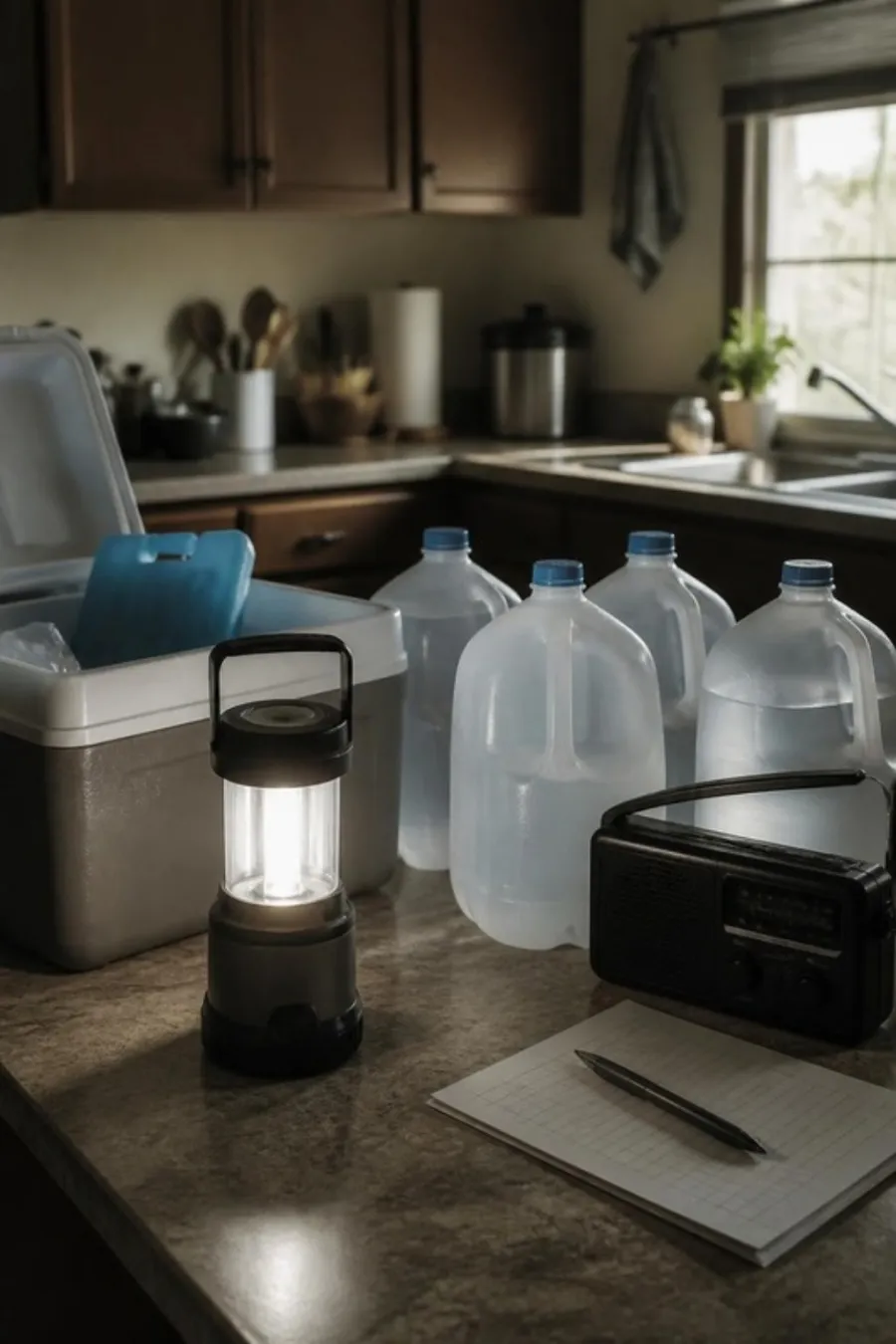
- Sign up for alerts: plural. Your utility’s PSPS alert system and your county’s emergency notification system aren’t the same thing and don’t always overlap. Sign up for both (text and email as well as the app).
- Know your evacuation zone before you need to. Most fire-prone counties publish a zone lookup tool. Check yours now, and know the difference between an evacuation warning (be ready to leave) and an evacuation order (leave now): confusing the two under stress is a real and common problem.
- Charge everything, then charge the backups. Phones, laptops, power banks, and any medical devices with rechargeable batteries should top off as soon as a shutoff watch is issued, not after the power drops.
- Fill water containers. Water systems can lose pressure during extended outages, particularly where pumps rely on grid power. Run your own numbers with my free emergency water calculator so you know exactly how much your household needs, then fill accordingly.
- Plan for medication and refrigerated items separately. If anyone in the household depends on refrigerated medication (insulin, for example), sort out a cooler-and-ice plan, or a backup-power priority for that specific item, now. Not after the fridge has already warmed up. A simple fridge thermometer helps you check that food stays at 40°F or below, the USDA’s food-safety line.
- Make a plan for pets. Carriers or leashes accessible, a few days of food and any pet medication set aside, and a note of which nearby shelters or hotels accept animals.
- Fuel up the car. Gas stations can’t pump without power either, and you don’t want to be hunting for an open one during an evacuation.
Staying Safe Through Extreme Heat: With or Without AC
A multi-day heat wave on top of a power shutoff is its own hazard, separate from the fire risk, and it’s the one most likely to hurt someone if it’s ignored.
Hydrate before you’re thirsty
Thirst lags behind actual dehydration, especially in heat like this. Drink water consistently through the day rather than waiting for a cue your body sends late, and go easy on alcohol and heavy caffeine, since both work against hydration. If you’re physically active in the heat (clearing gutters, loading the car, hauling water) the CDC’s guidance for working in heat is about one cup (8 oz) of water every 15–20 minutes, and generally no more than about six cups an hour (CDC/NIOSH).
Cooling without AC
Close blinds and curtains on the sun-facing side of the house during peak sun hours. Stay on the lowest floor of the home if you have one: heat rises. Run a battery or power-station-powered fan, especially overnight, and use damp cloths on the neck or wrists for quick relief. If conditions get severe and it’s safe to go (and smoke isn’t a factor), a public library, mall, or designated cooling center is a legitimate option for a few hours. Not a last resort.
Know the warning signs
Heat exhaustion typically shows up as heavy sweating, weakness, dizziness, nausea, and clammy skin: move the person somewhere cooler, give water, and cool them with damp cloths. Heat stroke is the medical-emergency version: hot, dry or flushed skin, confusion, a rapid pulse, or loss of consciousness. If you see signs of heat stroke, call emergency services and start cooling the person immediately. This isn’t a wait-and-see situation.
Check on the people who can’t easily check on themselves
Older adults, young kids, pregnant people, and anyone with a chronic health condition are at higher risk in extreme heat without AC, and may not recognize their own symptoms. A quick call or knock on the door matters more than it sounds like it would.
Pets need it too
Never leave a pet in a parked car, even briefly, even with the windows cracked. Keep them off hot pavement, ensure constant access to water and shade, and watch for excessive panting or lethargy.
Backup Power and Lighting Without the Grid
For a shutoff measured in hours, phone and laptop batteries usually get you through. Past that, you’re choosing between a generator and a battery-based power station, and for most households in a PSPS scenario specifically (no storm, often still-smoky air), a portable power station is the more practical, lower-maintenance choice: no fuel to store, no carbon monoxide risk, and quiet operation. I go through sizing and real tradeoffs, what you need to run a fridge versus just electronics, in my backup power options guide. For most homes, I’d start with the Jackery HomePower 1000 v2: about 1kWh of battery, enough for phones, a router and a CPAP through the night, or a fridge for part of a day.
For lighting, skip the candles: an unattended flame during a wind event is its own hazard, and it’s exactly the kind of risk this whole situation is about avoiding. A dedicated emergency lantern built for a multi-day outage (rather than a camping lantern built for a weekend trip) gives you consistent, hands-free light and tends to run longer when you need it. My emergency lantern guide covers what’s worth buying.
If You’re Told to Evacuate
Losing power and being told to leave are different problems, and it’s worth knowing where the line is before it matters. A PSPS alone doesn’t mean you need to evacuate. It means your power is off. An evacuation warning or order is a separate notice tied to fire behavior, issued by zone, and it’s the point where the plan shifts from “manage the outage” to “get out safely.”
Your go-bag should already be packed
The entire point of a go-bag is that you don’t build it during an evacuation warning. You grab it. My go-bag guide breaks down what a wildfire-driven evacuation bag needs, which looks a little different from a general disaster bag (smoke protection and clothing that won’t melt matter more; multi-week food supplies matter less).
Wildfire smoke and air quality
Even outside a mandatory evacuation zone, nearby wildfire smoke can make outdoor air genuinely unhealthy to breathe. For ordinary wildfire smoke, a well-fitted N95 or P100 respirator is the appropriate, standard protection for nearly everyone. A full gas mask or CBRN-rated respirator addresses a different category of threat entirely and isn’t necessary for smoke exposure on its own. I go through exactly where that line is in my gas mask and CBRN buying guide.
Water and basic first aid, sized for a bag, not a house
You’re not trying to store two weeks of water in a go-bag: a few bottles plus a compact filter or purification tablets covers you if you end up somewhere without a reliable supply. I compare the tablets-vs-filter tradeoffs and have a full filter guide if you want a dedicated option. A stocked trauma/first-aid kit is also worth having in the bag: evacuations involve a lot of improvising, and my trauma kit comparison can help you pick one sized to your household.
Leave on your own timeline when you can
If you’re in a warning zone and conditions feel wrong to you, you generally don’t have to wait for a mandatory order to leave. Evacuating a few hours early, in daylight, with light traffic, is a far better experience than leaving at the last minute in the dark and smoke.
Not sure where to start building any of this out? My five-question find-your-kit quiz points you toward the right starting setup for your household instead of guessing.
Free Updates
I send an email when something’s genuinely worth your time: a new guide, a real price drop on something I recommend, or an actual safety alert. No spam, no daily digest, unsubscribe anytime.
FAQ
How long do PSPS events usually last?
It varies by utility and conditions. Southern California Edison, for example, says PSPS events can last more than 24 hours, and once the weather calms, crews have to inspect every de-energized line before turning power back on: inspections typically take up to eight hours, longer if they need daylight for ground or aerial patrols (SCE). Plan for at least a day, and longer to be safe. Your utility’s live outage map is the most reliable source for an estimated restoration window for your specific circuit.
Is a PSPS the same thing as a blackout?
No. A storm-damage blackout is unplanned. The utility is working to restore power as fast as possible after something failed. A PSPS is planned and deliberate: the utility cuts power on purpose, ahead of time, specifically because high heat, low humidity, strong wind, and dry vegetation together raise the odds that its own equipment could spark a fire if it stayed energized. The outcome (no power) looks the same; the cause and the advance warning are different.
Will insurance cover spoiled food from a PSPS?
It depends entirely on your specific policy, and coverage for food spoilage from a planned utility shutoff isn’t guaranteed the way storm damage sometimes is. Don’t count on the utility as a backstop either: PG&E’s outage-compensation programs, for example, specifically exclude Public Safety Power Shutoffs. Check your homeowner’s or renter’s policy before fire season, and if you do file a claim, photograph spoiled food before you throw it out.
Do I need a gas mask for wildfire smoke, or is an N95 enough?
For ordinary wildfire smoke, a properly fitted N95 or P100 respirator is the right tool for nearly everyone. It filters the fine particulate matter that makes smoke harmful to breathe. A full gas mask or CBRN-rated respirator is built for a different category of threat and adds cost and complexity without meaningfully improving smoke protection over a good, well-sealed particulate respirator. I break down exactly where that line is in my gas mask and CBRN buying guide.
How do I find out if I’m in a shutoff zone?
Check your specific utility’s live PSPS outage map directly (major California utilities, including Southern California Edison and San Diego Gas & Electric, publish one during active events) and make sure you’re signed up for text or email alerts tied to your actual address. Your county’s emergency management site will also show your evacuation zone, which is worth checking at the same time.
The Prep Verdict is reader-supported. If you buy through a link on this page, I may earn a commission at no extra cost to you. See my full disclosure for details. I only recommend products I’d put in my own emergency supplies.