Three flours can sit on the same pantry shelf and still need three different storage plans. All-purpose flour holds up for about a year. Whole wheat and almond flour can turn rancid in a few months, and the first sign is usually a sharp, bitter smell, a little like old paint. Treating every flour the same is how most of it goes bad early.
That’s the whole story with flour, and it comes down to one mechanism: fat content. White flour has had the wheat germ, where nearly all the grain’s natural oil lives, milled out, which is exactly what makes it so shelf-stable. Whole wheat flour keeps that germ intact. Nut-based flours like almond are, compositionally, mostly fat to begin with. The more oil a flour contains, the faster it goes rancid, full stop. Sort your flours into “practically no oil” and “meaningful oil” and the rest of this page fills in the specifics.
Quick Verdict
Start here. Find your flour, get your answer, come back for the details if you want them.
- White / all-purpose flour: the most shelf-stable flour there is, because milling removes the oil-bearing wheat germ. About a year in a sealed pantry container, roughly two years refrigerated, and effectively indefinite in the freezer for quality.
- Whole wheat flour (and other whole-grain flours): the one that goes bad, because it keeps that oil-bearing germ intact. Plan on about 1 to 3 months in the pantry (published guidance runs from a few weeks to about 6 months), about 2 to 3 months in the fridge, and about 6 to 8 months in the freezer.
- Nut and gluten-free flours (almond, coconut, and similar): behave like whole wheat, only more so. High fat content means they go rancid fast at room temperature. Refrigerate or freeze as the default, not an afterthought, and check the ingredient list, since a rice-and-starch blend behaves more like white flour than a nut-based one does.
- Self-rising flour: the flour itself is as stable as all-purpose, but the baking powder mixed into it loses lifting power over time, so baked goods stop rising properly well before the flour itself goes bad. Treat it as shorter-dated than plain all-purpose.
Bottom line: the single thing that explains every number on this page is fat content. White flour has almost none. The wheat germ is milled out. Whole wheat, nut, and gluten-free flours keep it, or add it, and that oil is what oxidizes and turns rancid. Once that clicks, none of the numbers below look arbitrary.
Free Updates
I send an email when something’s genuinely worth your time: a new guide, a real price drop on something I recommend, or an actual safety alert. No spam, no daily digest, unsubscribe anytime.
How to Tell Flour Has Gone Bad
Flour doesn’t spoil the way dairy or produce does: it’s too dry for most spoilage bacteria to get going, which is exactly why the USDA classifies it as a shelf-stable pantry staple. What you’re checking for is almost always a quality problem, not a safety emergency.
- Smell it first. This is the best test. Fresh flour smells neutral to faintly nutty. Rancid flour (almost always whole wheat, whole grain, or nut-based) smells sour, musty, waxy, or a bit like old paint or crayons. Once you’ve smelled it, you won’t second-guess it again.
- Taste is the backup check. If the smell is borderline, a small taste settles it. Rancid flour tastes bitter or “off” in a way that carries into anything baked with it. Not dangerous in a small amount: just unpleasant. Don’t bake a full batch to find out.
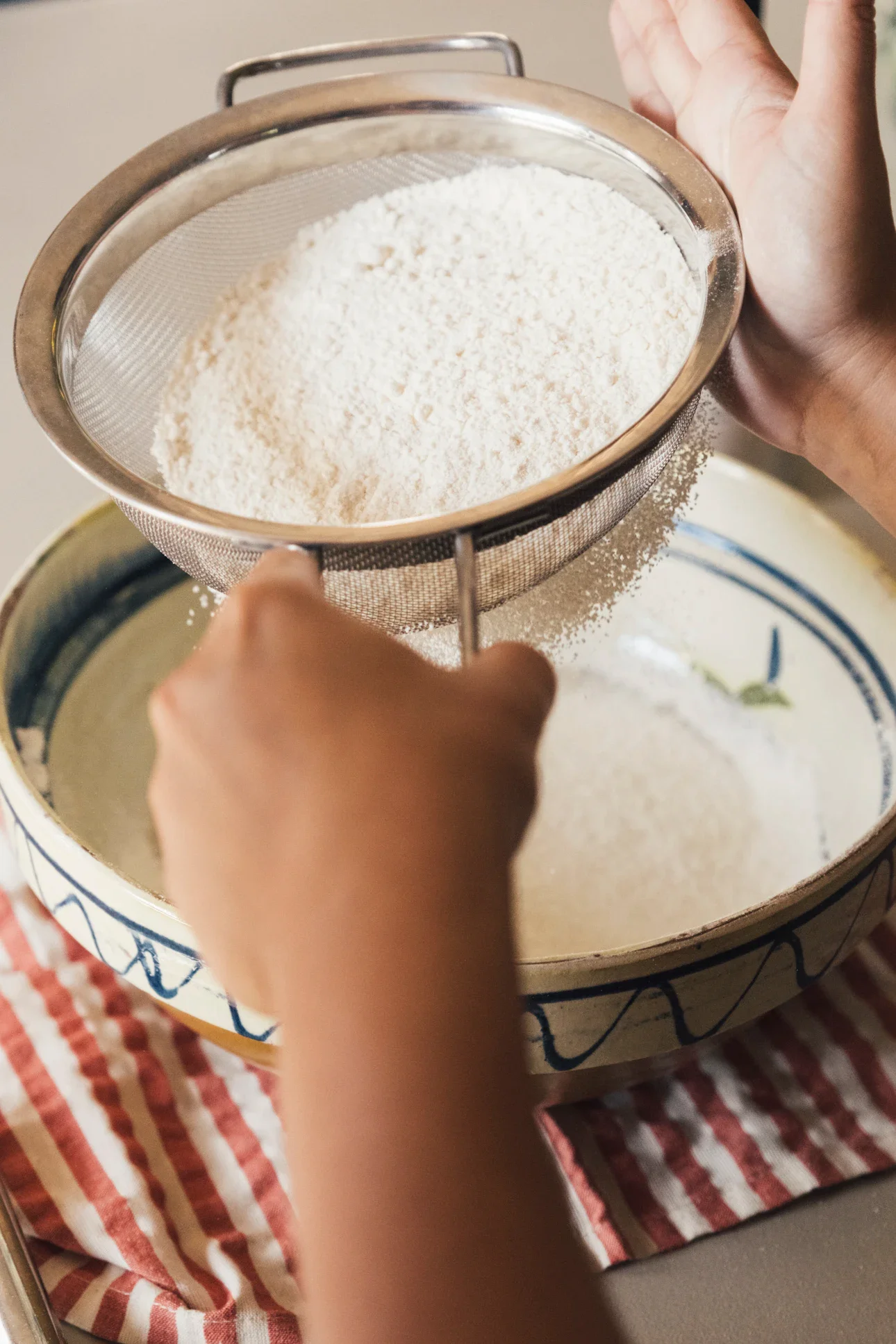
- Look for real changes. Clumping from humidity is common and not itself a problem: sift it or break it up. Discoloration, dark specks that weren’t there before, or any mold means the whole bag goes in the trash, including the part that looks fine.
- Check for bugs. Pantry moths and weevils get into flour, especially whole grain flour or anything stored a long time in its original paper bag. Small webbing, fine dark specks or “sand” that wasn’t there before, or visible insects mean toss the bag, and check what’s stored nearby, since it can spread.
The real distinction: rancidity is a quality issue, not a food-safety emergency. It tastes bad, but a small amount isn’t dangerous the way spoiled dairy or meat would be. Visible mold or an active pest infestation is different. That’s genuine contamination, and the bag goes, full stop. When in doubt, trust your nose over the date on the bag.
Storage Method Comparison, By Flour Type
White / All-Purpose Flour
| Storage | Shelf life | Notes |
|---|---|---|
| Pantry (sealed, room temp) | About 1 year (Utah State University Extension, sealed container at 70°F) | The flour itself is very stable; a cool, dark spot away from the stove or a sunny window slows any quality decline further |
| Refrigerator | Up to about 2 years at 40°F (Penn State Extension) | Airtight container matters: flour readily absorbs fridge odors and moisture |
| Freezer | Effectively indefinite for quality (Penn State Extension) | Overkill for most home bakers who go through flour regularly; useful for bulk buyers or infrequent bakers |
White flour has the wheat germ milled out, so there’s very little oil left to oxidize, which is exactly why it tolerates loose, room-temperature storage far better than any whole-grain product.
Whole Wheat Flour (and Other Whole-Grain Flours)
| Storage | Shelf life | Notes |
|---|---|---|
| Pantry (sealed, room temp) | About 1 to 3 months for best quality. Published guidance runs from a few weeks up to about 6 months, so use 1 to 3 months as the safe planning number | This is not a “leave it for months and forget it” flour: use it faster than you’d think, or move it to cold storage |
| Refrigerator | About 2 to 3 months (University of Missouri Extension, for most whole-grain flours). Penn State Extension advises refrigerating whole wheat flour year-round | Store toward the back, away from the door, to limit temperature swings |
| Freezer | About 6 to 8 months for best quality (University of Missouri Extension, for most whole-grain flours) | Best option for whole grain flour you won’t use up quickly |
The mechanism, not the exact number, is the well-established part: milling breaks the membranes that keep the wheat germ’s oil separated from the rest of the grain. Once exposed to air, that oil starts oxidizing. The same process that turns an old bottle of cooking oil rancid. A 12-month university storage study on whole wheat flour specifically (BYU ScholarsArchive) measured this directly: free fatty acids increased significantly and the flour’s natural antioxidants (tocopherols) decreased significantly over that period: real, measured evidence behind the “use it faster” advice.
Nut Flours and Gluten-Free Blends (Almond, Coconut, and Similar)
These follow the same fat-content logic as whole wheat, just more intensely: nut flours are largely fat by composition, so they go rancid faster at room temperature than even whole wheat does.
| Storage | Shelf life | Notes |
|---|---|---|
| Pantry (unopened, sealed) | About 1-2 months | Manufacturer guidance generally recommends refrigeration after opening rather than extended pantry storage |
| Refrigerator | About 6-9 months | This is the realistic default storage method, not an upgrade |
| Freezer | About 9-12 months | Best for anything you won’t use within a couple of months |
Not every “gluten-free flour” is a nut flour, so check the ingredient list. A blend built mainly from rice and starches behaves more like white flour; anything built on almond, coconut, or another nut or seed flour should be treated like the table above.
Self-Rising Flour
Self-rising flour is all-purpose flour with baking powder (and usually salt) already mixed in. The flour component is exactly as stable as plain all-purpose. It doesn’t spoil on a different timeline. What changes is the baking powder: leavening agents gradually lose their chemical punch in storage, so a bag can be perfectly fine to eat and still produce flat, dense baked goods. King Arthur Baking confirms this mechanism directly but doesn’t publish a specific month figure, so the commonly-cited estimate below is offered as a planning guideline, not a settled fact.
| Storage | Shelf life | Notes |
|---|---|---|
| Pantry | About 6-12 months for full leavening power | The flour stays usable much longer; it’s rise, specifically, that fades |
| Refrigerator / Freezer | Doesn’t meaningfully extend leavening life | Cold storage protects the flour from rancidity but doesn’t preserve baking-powder potency |
Quick test: stir a small spoonful into warm water. If it fizzes actively, the leavening is still working. If it barely reacts, expect flat results: add fresh baking powder to the recipe, or switch to plain flour plus your own leavening.
Long-Term Storage: Mylar Bags & Oxygen Absorbers
If you’re thinking about flour as part of an actual multi-year food storage plan rather than everyday kitchen rotation, the fat-content principle above matters even more, and it means white and whole wheat flour deserve completely different plans.
White flour is a genuinely good long-term-storage candidate. Its low oil content is exactly why it holds up well in a sealed Mylar bag with an oxygen absorber, kept cool and dark. Long-term-storage sources commonly describe this as a multi-year option, with specific numbers varying more by community consensus than by a single government figure.
Whole wheat flour is a poor long-term-storage candidate no matter how it’s packaged. An oxygen absorber removes ambient air from the bag, but it doesn’t stop the oil already inside the milled germ from oxidizing on its own, which is exactly what the BYU storage study measured happening over just 12 months. Sealing whole wheat flour in Mylar buys some time over leaving it in a paper bag, but it doesn’t turn it into a multi-year item the way it does for white flour.
The actual workaround, if whole grain matters to your plan: store whole wheat berries, the unmilled kernel, in Mylar with oxygen absorbers instead of pre-ground flour, then grind small batches with a hand or electric mill as needed. Unmilled berries keep their protective bran layer intact, which is what shields the germ’s oil from air exposure, and they store dramatically longer than flour ground from the same grain. This is standard practice in long-term food storage circles for exactly this reason, and it’s a genuinely useful distinction this article can make that a generic “flour shelf life” page usually misses.
Common Mistakes That Shorten Flour’s Shelf Life
- Leaving flour in its original paper bag. Paper isn’t airtight or moisture-proof. Transfer it to a sealed container as soon as you open it. This single habit does more for shelf life than almost anything else here. An OXO POP 4.4-quart container fits roughly a 5 lb bag of flour.
- Storing whole wheat or nut flour in the pantry by default. The most common mistake specific to these types: people store every flour the same way out of habit, and the oil-bearing ones go rancid months before anyone expects it.
- Keeping flour near the stove, oven, or a sunny window. Heat and light both accelerate oxidation.
- Not labeling or dating containers. Once flour is out of its original bag, it’s easy to lose track of how long it’s been open. A piece of tape with the date solves this in ten seconds.
- Mixing old and new stock in the same container. Topping off without using the older flour first means you’re never rotating: first in, first out.
- Sealing flour into Mylar straight from the freezer. Cold flour sealed into an airtight bag while still cold lets moisture from the air condense inside as it warms. Let it return to room temperature first.
- Skipping a pre-freeze step before long-term packaging. Flour can carry pantry-pest eggs invisible at purchase. Freezing it for a few days before sealing it away long-term kills those eggs before they become a problem months later.
Free Updates
I send an email when something’s genuinely worth your time: a new guide, a real price drop on something I recommend, or an actual safety alert. No spam, no daily digest, unsubscribe anytime.
Flour is just one piece of a long-term pantry plan: see how rice, sugar, and honey compare, or check peanut butter’s storage rules if you’re rounding out the rest of your dry-goods shelf.
FAQ
Does flour really go bad, or just lose quality?
Mostly the latter. Rancidity (an oxidized-fat problem, mostly in whole wheat, whole grain, and nut flours) is a quality issue, not a food-safety emergency. Actual spoilage in the dangerous-bacteria sense is rare in flour because it’s too dry to support it. The exceptions that matter are visible mold and pest infestation, both of which mean the bag gets discarded.
Why does whole wheat flour go bad faster than white flour?
White flour has the wheat germ, where nearly all the grain’s natural oil lives, milled out. Whole wheat flour keeps it, so that oil is exposed to air from the moment it’s milled and starts oxidizing. A university storage study measured this directly in whole wheat flour: free fatty acids rose and natural antioxidants dropped significantly over 12 months of storage.
Can you store whole wheat flour long-term in Mylar bags with oxygen absorbers?
Not as effectively as you’d hope. Oxygen absorbers remove ambient air from the bag, but they don’t stop the oil already inside the milled wheat germ from breaking down on its own. If long-term whole-grain storage matters to your plan, storing unmilled wheat berries and grinding small batches as needed holds up dramatically longer than storing pre-ground whole wheat flour.
Should I keep flour in the fridge or the freezer?
For white/all-purpose flour, pantry storage in a sealed container is generally fine, and the fridge or freezer are optional upgrades. For whole wheat, nut-based, and gluten-free flours, the freezer is the more reliable default if you don’t go through the bag quickly. It slows oxidation far more than the fridge alone.
How do I know if my self-rising flour still has rise left in it?
Stir a small spoonful into warm water. Active fizzing means the leavening is still working. A weak reaction means expect flatter results. The flour itself is still fine to eat, it won’t lift the way it should, so add fresh baking powder to the recipe or use plain flour with your own leavening instead.
The Prep Verdict is reader-supported. If you buy through a link on this page, I may earn a commission at no extra cost to you. See my full disclosure for details. I only recommend products I’d put in my own emergency supplies.