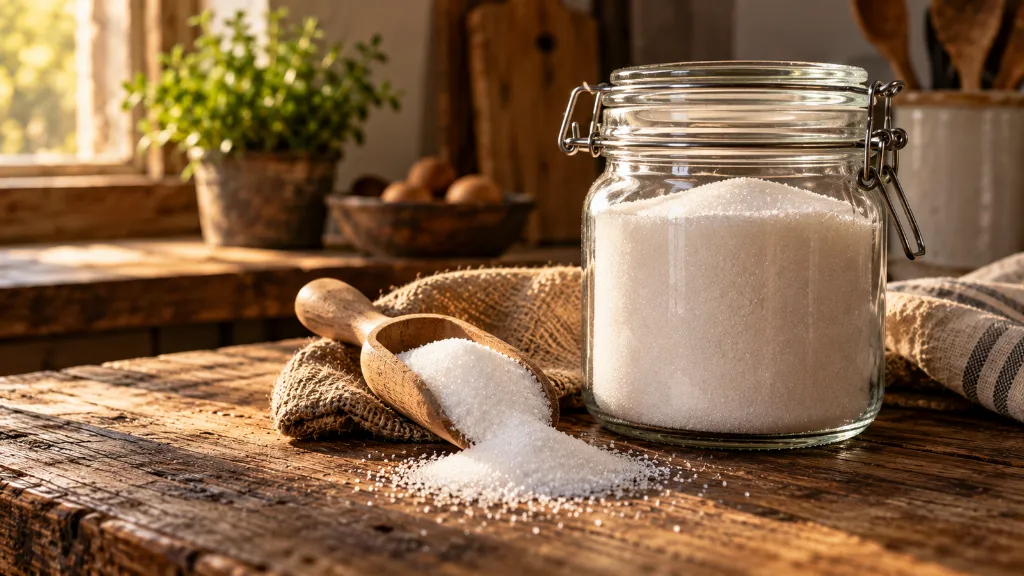
Open almost any pantry and there’s a bag of sugar that’s been sitting there for who-knows-how-long, past whatever date is printed on it. The question is whether that matters, and for plain sugar, the answer is refreshingly simple: it basically doesn’t.
Sugar is one of the few pantry staples that doesn’t have a real expiration date, for a specific reason rooted in food science, not folklore. Here’s what happens to sugar over time, why brown sugar behaves differently, and when (rarely) you should throw a bag out.
Quick Verdict
Sealed and dry, granulated sugar lasts indefinitely: the “best by” date is about quality, not safety.
Brown sugar hardens as it dries out (not spoils); powdered sugar clumps if it picks up moisture.
Free Updates
I send an email when something’s genuinely worth your time: a new guide, a real price drop on something I recommend, or an actual safety alert. No spam, no daily digest, unsubscribe anytime.
Why sugar doesn’t spoil
Bacteria and mold need water to grow. Sugar is almost pure sucrose with next to no moisture in it, and it’s hygroscopic. It pulls water out of anything nearby, including a microbe trying to grow on it. That’s the same property that makes sugar a preservative in jams and cured meats. In a sealed, dry container, granulated sugar stays safe to eat indefinitely. Old sugar might clump if it picked up humidity, or pick up a faint smell if it sat next to something pungent, but neither of those is a health risk: just a texture or flavor issue you can usually fix.
Pantry, fridge, or freezer: it doesn’t matter
Sugar doesn’t need refrigeration and gains nothing from it. In fact, a cold, humid environment (like condensation inside a fridge container) is more likely to cause clumping than a dry pantry shelf. Keep it in a sealed container, at room temperature, away from your stove or dishwasher where steam collects.
What goes wrong with each type
Granulated (white) sugar. The most stable of the three. Left in its original bag, it can pick up moisture from the air and harden into a solid block: still fine to eat, just annoying to use. An airtight container solves this permanently.
Brown sugar. This is the one people think has “gone bad” because it turns into a brick. It hasn’t: brown sugar hardens when it loses moisture, not gains it (the molasses coating dries out). Add a slice of bread, a wedge of apple, or a terracotta brown sugar saver to the container for a day and it softens back up. In a pinch, microwave it for 20-30 seconds with a damp paper towel over it.
Powdered (confectioners’) sugar. Behaves like granulated sugar: indefinite shelf life if kept dry, prone to clumping if it isn’t. Sift it before use if it’s been sitting a while.
Signs your sugar needs to go
There basically aren’t any safety-related ones. The only real reasons to toss a bag of sugar:
- Visible mold or insects (rare, but it happens if a container wasn’t sealed and pantry moths got in)
- A strong off-odor it’s absorbed from storage next to something like onions or cleaning supplies
- You genuinely can’t break up the clumping and don’t want to deal with it
None of these are food-safety emergencies: sugar doesn’t carry the same bacterial risk as protein or dairy.
How to store it so it lasts
- Transfer sugar out of its paper bag into an airtight container as soon as you open it. This is the single biggest factor in whether it clumps
- Keep it in a cool, dry spot, not next to the stove, dishwasher, or a sink
- Store brown sugar with a moisture source (bread heel, apple slice, brown sugar saver disc) to keep it soft
- Don’t bother with the freezer: it doesn’t extend shelf life and adds a condensation risk when you take it back out
Free Updates
I send an email when something’s genuinely worth your time: a new guide, a real price drop on something I recommend, or an actual safety alert. No spam, no daily digest, unsubscribe anytime.
Sugar is one of the easier pantry staples: for a look at foods that need more careful handling, see how eggs hold up, how long MREs really last, and how freeze-dried, dehydrated, and MREs compare for longer-term storage.
FAQ
Does sugar really never expire? Correctly stored, plain granulated sugar has no meaningful expiration. The date on the package is a manufacturer’s quality guideline, not a safety cutoff.
Why did my sugar turn hard? Granulated and powdered sugar harden when they absorb moisture from the air; brown sugar hardens when it loses moisture. The fix is the opposite in each case: dry it out for white/powdered, add moisture back for brown.
Can old sugar make you sick? Not from age alone. The only sugar worth discarding is sugar with visible contamination (mold, insects) or a strong absorbed odor: both are rare with a sealed container.
Is raw or turbinado sugar the same? Yes: any dry, granulated sugar behaves the same way for storage purposes. Sugars with added moisture (like some organic or “wet” cane sugars) are more clump-prone but not less safe.
The Prep Verdict is reader-supported. If you buy through a link on this page, I may earn a commission at no extra cost to you. See my full disclosure for details. I only recommend products I’d put in my own emergency supplies.