A five-gallon bucket of white rice stored in a cool, dark pantry can still be good to cook from years later. A bag of brown rice bought the same day can start smelling faintly like old crayons within months. Same grain, same kitchen, wildly different outcomes, and that difference is the whole story with rice.
There are really three separate questions hiding inside “how long does rice last”: how long does dry white rice last, how long does dry brown rice last, and how long is cooked rice safe to eat. The first is close to “forever.” The second is closer to “use it in a season.” The third isn’t really about spoilage at all. It’s a real food-safety issue with a bacterium that specifically likes rice. Mixing these three up is where most of the bad advice online comes from.
Quick Verdict
- The Short Answer: White rice, stored dry and sealed, essentially doesn’t expire. It’s shelf-stable indefinitely from a food-safety standpoint. For best texture and flavor, use it within about 4-5 years in normal pantry storage; sealed with an oxygen absorber in a Mylar bag, it can last decades.
- The Exception: Brown rice spoils much faster. Its bran layer still has natural oils in it, and those oils go rancid. Pantry: 3-6 months. Fridge: 6-12 months. Freezer: 12-24 months.
- The one that matters for safety: cooked rice. Unlike dry rice, cooked rice is a genuine food-safety issue. Refrigerate within 2 hours (1 hour if it’s hot out), eat within 3-4 days, and never leave it sitting out to cool on the counter. More below. This is the single most important thing on this page.
| Pantry | Fridge | Freezer | |
|---|---|---|---|
| White rice (dry, sealed) | Indefinite for safety; ~4-5 years best quality | Not needed | Not needed (freezing dry rice is mainly a pest-prevention step, not a shelf-life extender) |
| Brown rice (dry, sealed) | 3-6 months | 6-12 months | 12-24 months |
| Cooked rice (either type) | Not safe to leave out past 2 hrs | 3-4 days | 4-6 months |
Free Updates
I send an email when something’s genuinely worth your time: a new guide, a real price drop on something I recommend, or an actual safety alert. No spam, no daily digest, unsubscribe anytime.
How to Tell Rice Has Gone Bad
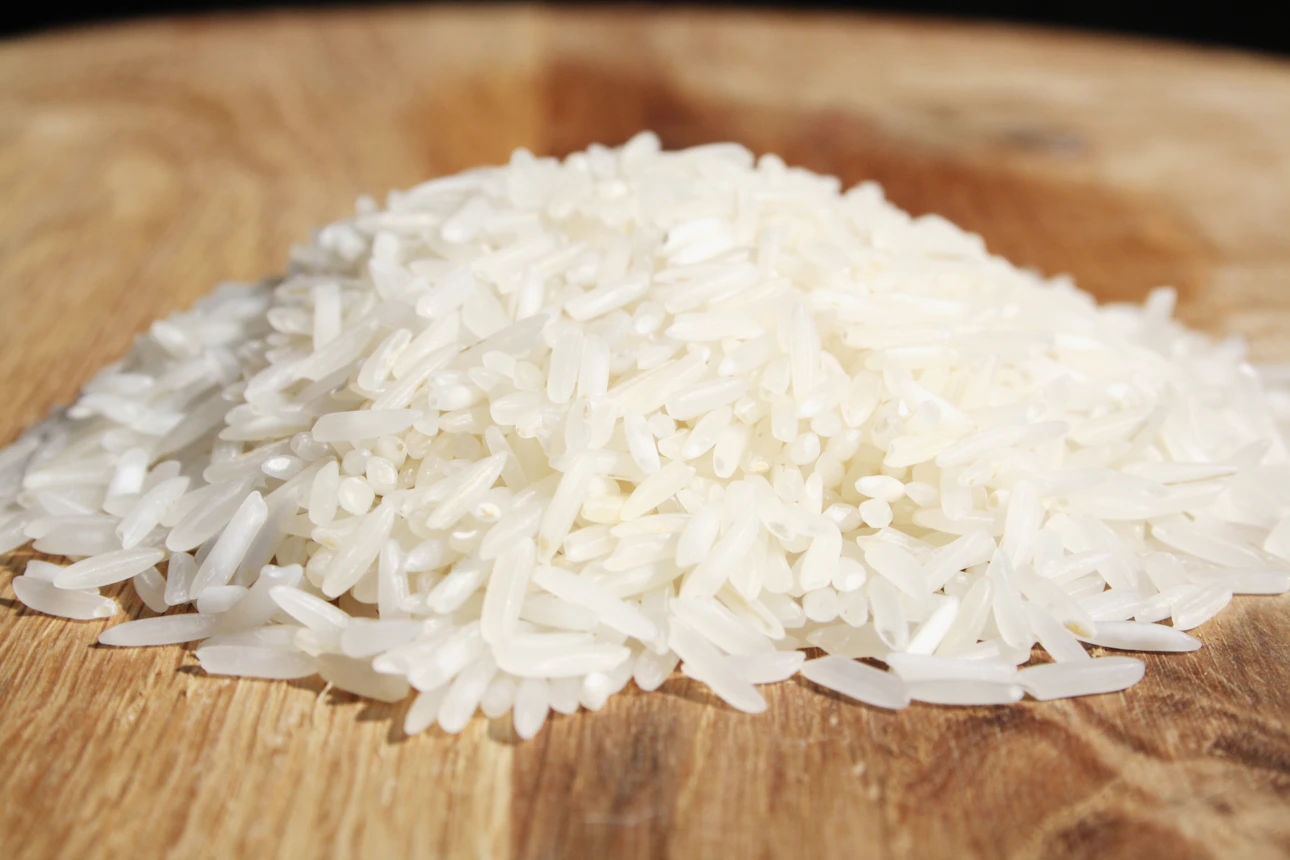
Dry white rice. Because it’s had the bran (the oily outer layer) milled off, white rice has almost nothing in it that can go rancid. Properly stored (dry, sealed, away from moisture), it doesn’t really “go bad” so much as it can pick up pests or take on off-odors from its environment. Check for:
- Bugs or larvae. Rice weevils and other pantry pests are the actual enemy of long-stored dry rice, not spoilage. Small holes in individual grains, a fine dust at the bottom of the container, or visible movement mean it’s time to toss that batch and re-inspect your storage container.
- Off smell. Fresh white rice smells like almost nothing. A musty, moldy, or sour smell usually means moisture got in somewhere: condensation, a cracked seal, storage in a damp basement.
- Clumping or visible mold. Rice that’s absorbed moisture can clump, and in bad cases, mold spots. Any mold means the whole batch goes in the trash, including the grains that look fine.
Dry brown rice. Because the bran (and its natural oils) is still intact, brown rice does go rancid the way nuts or whole-wheat flour do:
- Smell it first. Fresh brown rice smells mildly nutty. Rancid brown rice smells oily, sharp, or a little like paint: similar to how rancid nuts or natural peanut butter smell.
- Taste. If the smell is borderline, a small taste will tell you. Rancid rice tastes bitter or “off” in a way that’s unpleasant but not typically dangerous to have eaten in a small amount.
- This is a quality issue, not usually a safety one. Rancid oils taste bad; they aren’t the same food-safety risk as bacterial contamination. Toss it for taste, not out of fear of illness.
Cooked rice: different rules entirely. Cooked rice doesn’t need to smell or look “off” to be unsafe. This is the important part: Bacillus cereus, a bacterium naturally found on raw rice, survives cooking as heat-resistant spores. If cooked rice is then left at room temperature, those spores germinate and can produce a toxin that isn’t destroyed by reheating. The CDC’s classic case report on this, an outbreak traced to fried rice at two Virginia day care centers, found illness came specifically from rice that was cooled at room temperature before refrigeration and later held without refrigeration before serving (CDC MMWR). You can’t smell or taste your way out of this one; the toxin doesn’t reliably change how the rice looks, smells, or tastes. The only real safeguard is time and temperature control, covered below.
Storage Method Comparison: What Extends Rice’s Shelf Life
Dry white rice
| Method | Shelf life | Notes |
|---|---|---|
| As-is (original bag, pantry) | 1-2 years realistic quality window, though it stays safe well beyond that | Fine for normal household use; reseal the bag tightly after opening |
| Airtight container (pantry) | 4-5+ years best quality | Keeps out moisture and pests better than the original paper or thin plastic bag; this is the easy upgrade most people skip |
| Vacuum-sealed | Similar to airtight, with somewhat better pest/moisture protection | Doesn’t meaningfully outperform a good airtight container for dry rice specifically, since rice isn’t prone to oxidation the way brown rice or oils are |
| Mylar bag + oxygen absorber (long-term/prepper storage) | Commonly cited at 25-30 years under ideal cool, dark, dry conditions | This is the real long-term-storage method. It’s what turns a pantry staple into a genuine multi-decade food-storage asset. Oxygen removal is what matters here more than the Mylar itself; a loosely-packed bag without a working oxygen absorber won’t get you anywhere close to these numbers. If you want to set this up, a 10-pack of 5-gallon Mylar bags with oxygen absorbers included covers both pieces in one purchase. |
| Freezer | Doesn’t meaningfully extend white rice’s shelf life | Mainly useful as a 48-hour pest-prevention step for a new bag (kills any weevil eggs before they hatch in the pantry), not a long-term storage method for dry white rice |
Dry brown rice
| Method | Shelf life | Notes |
|---|---|---|
| As-is (pantry) | 3-6 months | The oils in the bran layer are already working against you from day one. Buy what you’ll use in a few months |
| Fridge | 6-12 months | The easy, no-equipment upgrade for brown rice specifically: cold meaningfully slows the oxidation that causes rancidity |
| Freezer | 12-24 months | The best option if you want to stock up on brown rice without buying it more often than you cook it |
| Mylar + oxygen absorber | Not a fix for the underlying issue | Oxygen removal slows rancidity somewhat, but brown rice’s natural oils will still degrade over a much shorter horizon than white rice’s. This isn’t a long-term-storage grain the way white rice is, regardless of packaging |
Cooked rice
| Method | Shelf life | Notes |
|---|---|---|
| Counter/room temperature | Unsafe past 2 hours (1 hour above ~90°F) | This is the USDA’s standard 2-hour rule (FSIS), not a rice-specific rule, but rice is one of the foods where ignoring it has a well-documented, specific illness attached to it (Bacillus cereus) |
| Fridge | 3-4 days | Cool it quickly: spread it in a shallow container rather than leaving a deep pot to cool slowly, which keeps it in the bacterial danger zone (40°F-140°F, per USDA FSIS) longer than necessary |
| Freezer | 4-6 months for best quality | Freeze in flat, portioned bags for faster cooling and easier reheating; reheat only once, and reheat thoroughly (steaming hot throughout, not just warm) |
Common Mistakes That Shorten Rice’s Shelf Life (or Make It Unsafe)
- Cooling cooked rice on the counter “until it’s not hot anymore” before refrigerating. This is the single biggest rice-specific safety mistake, and it’s exactly the mechanism behind the CDC’s fried-rice-outbreak case report. Get it into the fridge within 2 hours of cooking, sooner if your kitchen runs hot.
- Leaving cooked rice in a rice cooker on “warm” for hours. The warm setting on most consumer rice cookers doesn’t reliably hold food above the 140°F safety threshold the whole time, especially as it sits and cools toward the edges of the pot.
- Storing dry rice in its original bag long-term. Paper and thin plastic bags aren’t sealed against moisture or pests. It’s fine for near-term use, but anything you’re planning to keep for a year or more belongs in an airtight container at minimum.
- Not checking for weevils before long-term storage. Rice can arrive with pest eggs already present. A 48-hour freeze before transferring to long-term storage kills them before they become a problem months later.
- Buying more brown rice than you’ll use in a few months “because rice doesn’t go bad.” That’s true of white rice, not brown. Brown rice’s bran oils are working against it from the day it’s milled, regardless of how it’s stored afterward.
- Reheating rice more than once, or reheating it only until lukewarm. Each reheat-and-cool cycle is another window for bacterial growth if the rice sits at room temperature. Reheat once, and reheat it thoroughly.
Still stocking the pantry? I’ve also broken down the shelf life of flour, honey, and canned food elsewhere on the site.
Free Updates
I send an email when something’s genuinely worth your time: a new guide, a real price drop on something I recommend, or an actual safety alert. No spam, no daily digest, unsubscribe anytime.
Rice is one piece of a longer-term food-storage plan. See how long peanut butter and eggs last, how sugar holds up over time, or compare freeze-dried, dehydrated, and MREs for longer-term storage.
FAQ
Does rice really last forever?
Dry white rice comes about as close to “forever” as a pantry food gets. Properly sealed and kept dry, it’s safe indefinitely and stays good for eating for years. It’s not literally infinite (very old rice can pick up off-flavors or pest damage), but food-safety-wise, dry white rice isn’t a spoilage risk the way perishable foods are. Brown rice is the exception: its bran oils go rancid on a much shorter, months-not-years timeline.
Why does brown rice go bad faster than white rice?
Brown rice keeps its bran layer, which still contains natural oils. Those oils oxidize and turn rancid over time, the same way nuts, whole-wheat flour, or natural peanut butter do. White rice has that bran layer milled off, which is exactly what makes it shelf-stable for so much longer, at the cost of some of the nutrition and fiber the bran carries.
Is it dangerous to eat expired dry rice?
Rancid brown rice tastes unpleasant but generally isn’t dangerous in the way foodborne illness is. It’s a quality problem, not a safety one. The real safety risk with rice isn’t the dry grain at all; it’s improperly cooled or stored cooked rice, which is a genuine, well-documented cause of food poisoning (see the next question).
Can cooked rice make you sick even if it looks and smells fine?
Yes, and this is the part worth remembering. Bacillus cereus spores survive cooking, and if cooked rice sits at room temperature, those spores can grow and produce a toxin that reheating won’t destroy, without necessarily changing how the rice looks, smells, or tastes. The fix is simple: refrigerate cooked rice within 2 hours (per USDA FSIS guidance), keep it no more than 3-4 days, and don’t let it sit out to “cool down” on the counter first.
What’s the best way to store rice long-term, like for emergency preparedness?
White rice, not brown: brown rice’s shelf life is too short for genuine long-term storage regardless of how it’s packaged. For a multi-year food-storage supply, white rice sealed in a Mylar bag with an oxygen absorber, kept cool and dark, is the standard approach and can realistically last decades under good conditions.
The Prep Verdict is reader-supported. If you buy through a link on this page, I may earn a commission at no extra cost to you. See my full disclosure for details. I only recommend products I’d put in my own emergency supplies.