Search “pasta shelf life” and you’ll get answers ranging from “a few days” to “basically forever”, and both are correct, just for completely different products. That contradiction is the whole story here, and it’s the reason so many people either toss a perfectly good box of spaghetti that’s a year past its date, or eat refrigerated ravioli that’s been sitting open in the fridge for two weeks because “pasta doesn’t go bad.”
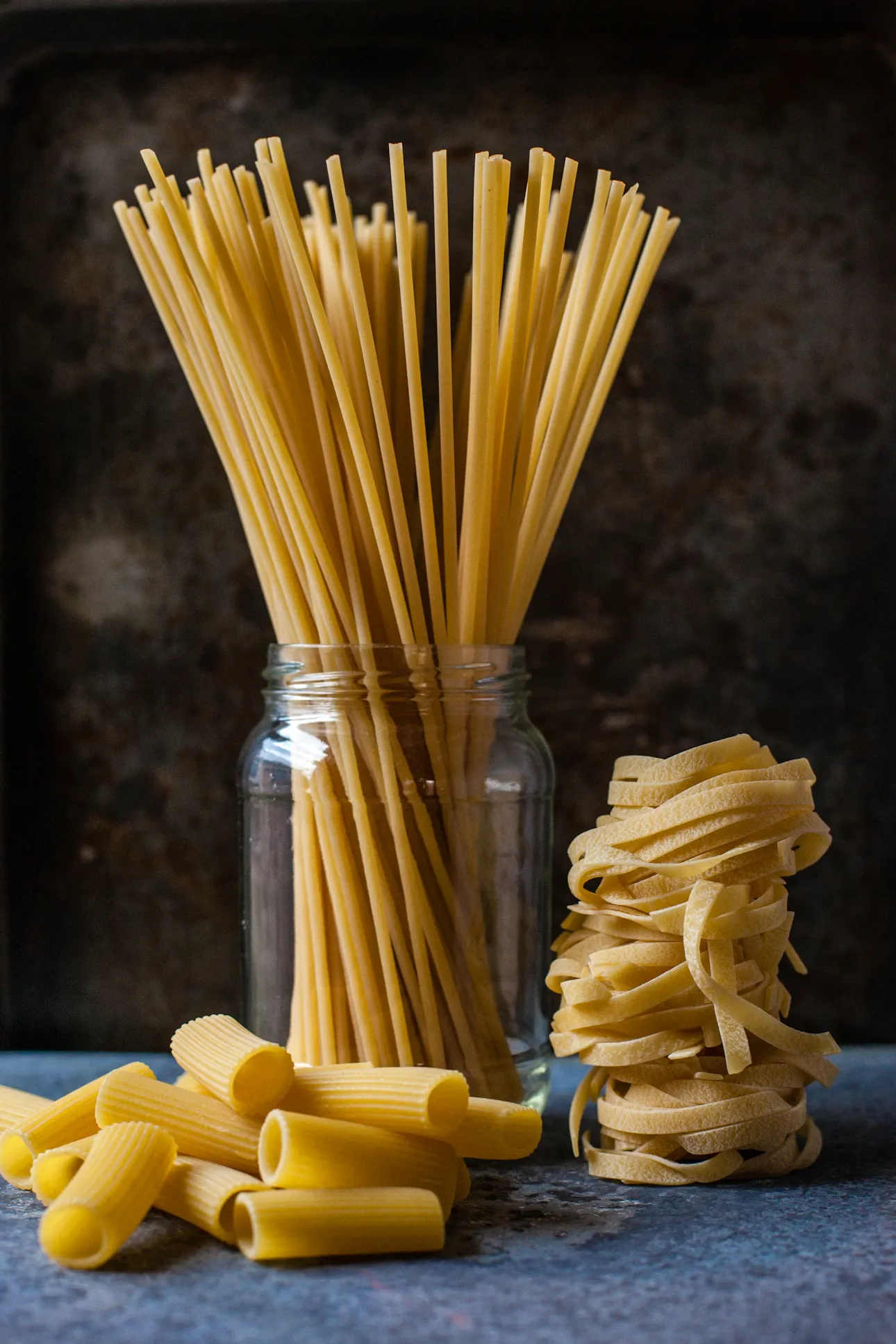
The confusion comes down to one distinction most articles blur past: dry pasta and fresh (refrigerated) pasta are not the same category of food. Dry pasta (the boxed or bagged stuff made from semolina flour and water, dried down to roughly 10-13% moisture) is one of the most shelf-stable foods in your kitchen, closer in behavior to rice or dried beans than to anything perishable. Fresh pasta (the kind sold in the refrigerated case, or the kind you make at home with eggs and flour) is a genuinely perishable product with a shelf life measured in days, not years. USDA’s shelf-stable food guide lists rice and dried pasta at about 2 years on the shelf.
I’m covering both here, plus the two variables that complicate the “dry pasta lasts forever” story: egg content (which introduces a small amount of fat that can eventually go rancid on its own, much longer timeline) and pantry pests (which are the real reason old dry pasta sometimes needs to be thrown out. Not spoilage in the traditional sense).
Quick Verdict
| Pasta Type | Typical Shelf Life | Verdict |
|---|---|---|
| Dry plain pasta (semolina, flour + water: spaghetti, penne, etc.) | 1-2+ years for best quality past the printed date; commonly cited 20-30 years in proper long-term sealed storage | Near-indefinite if kept dry: a legitimate long-term pantry staple |
| Dry egg pasta (egg noodles, egg-enriched dry pasta) | Roughly 1-2 years for best quality | Long shelf life, but shorter than plain: fat content is the limiting factor |
| Dry gluten-free pasta (rice, corn, or blended) | Roughly 2 years typical; varies more by formulation | Comparable to wheat pasta as a rule, but check for added oils |
| Fresh / refrigerated pasta (store-bought or homemade, uncooked) | 2-3 days past sell-by in the fridge; 1-2 months in the freezer for best quality | Genuinely perishable: treat like any refrigerated dairy or egg product |
Bottom line: If it’s dry and sealed, pasta is one of the most forgiving foods in your pantry. If it’s fresh or refrigerated, it behaves like any other perishable product and needs to be tracked like one.
Free Updates
I send an email when something’s genuinely worth your time: a new guide, a real price drop on something I recommend, or an actual safety alert. No spam, no daily digest, unsubscribe anytime.
How to Tell Pasta Has Gone Bad
The signs of “bad” pasta are almost entirely different depending on whether you’re looking at a box in the pantry or a bag in the fridge.
Dry pasta: the real risk is pests, not spoilage
Plain dry pasta is too low in moisture to support mold, bacteria, or the kind of spoilage that ends most foods. If you find an old box in the back of the pantry, the questions to ask aren’t “does it smell off”: they’re “has something gotten into it”:
- Small holes in individual pieces, or fine powder/dust in the box. This is the classic sign of a weevil infestation. Weevils have a distinctive forward-projecting snout and leave small, round exit holes in infested grain products.
- Fine silk webbing inside the box or clumping pieces together. This is a strong sign of Indianmeal moth larvae, which spin visible webbing through infested dry goods and can grow to about half an inch long.
- Small beetles in the box, on nearby shelves, or on the counter. Flour beetles and sawtoothed grain beetles are common secondary invaders of pasta, cereal, and other stored grain products, and a few visible beetles usually means more you haven’t seen yet.
- Live insects, larvae, or cocoons anywhere in the package. Any of the above means the box gets discarded: pests spread between packages, so check nearby dry goods too.
Plain pasta with none of these signs, even years past its printed date, is generally still fine to cook and eat; the printed date is a quality marker, not a safety cutoff.
Egg pasta: the one dry-pasta exception (rancidity)
Egg pasta and egg noodles are the exception to “dry pasta doesn’t really spoil.” The egg content introduces a small amount of fat, and fat can oxidize, go rancid, over a long enough timeline, unlike the plain flour-and-water pasta that has essentially nothing in it to oxidize. Rancidity in egg pasta shows up as:
- A stale, “off,” or faintly greasy/paint-like smell distinct from the neutral smell of fresh dry pasta
- A noticeably darker or more discolored appearance than when purchased
- A flat or slightly bitter taste if cooked and tasted
Rancid egg pasta generally isn’t dangerous to eat in the way spoiled perishable food is, but it won’t taste right, and there’s no reason to eat it once it’s gotten there: treat a clearly rancid smell as your cue to toss it.
Fresh / refrigerated pasta: real spoilage signs
This is where “normal” perishable-food spoilage signs apply, because fresh pasta is a perishable food:
- Visible mold: any fuzzy spots, regardless of color. Discard the whole package; don’t cut around it.
- A sour, sulfurous, or distinctly “off” smell. Fresh pasta should smell mild and neutral, close to bread dough.
- A slimy or tacky surface texture, beyond the light dusting of flour it may have been packaged with.
- Discoloration: gray or darkened patches, especially on filled pasta like ravioli or tortellini.
If fresh pasta shows any of these, it goes in the trash regardless of the printed date: perishable product spoilage doesn’t wait politely for a “use by” line.
Pasta Type Comparison: Dry Plain vs. Dry Egg vs. Fresh vs. Gluten-Free
| Type | Typical Pantry/Fridge Shelf Life | What Limits It |
|---|---|---|
| Dry plain pasta (semolina, durum wheat + water) | 1-2+ years past best-by for peak quality; commonly cited 20-30 years in proper long-term sealed storage | Essentially nothing to spoil at low moisture: pest infestation and, eventually, texture/flavor decline are the only real limits |
| Dry egg pasta (egg noodles, tagliatelle, pappardelle) | Roughly 1-2 years for best quality | Fat from egg content can slowly oxidize (go rancid): a much longer timeline than perishable food, but shorter than plain pasta |
| Dry gluten-free pasta (rice, corn, or blended) | Roughly 2 years typical | Generally comparable to wheat pasta; formulations with added oils (flax, some multigrain blends) can decline faster, especially in warm storage. Check the ingredient label |
| Fresh / refrigerated pasta (store-bought or homemade, uncooked) | 2-3 days past sell-by in the fridge; about 1-2 months in the freezer for best quality (safe longer if kept solidly frozen, with declining quality) | A genuinely perishable, higher-moisture product: treat storage like any refrigerated dairy/egg item |
Practical takeaway: if you’re asking “is my pasta still good” about a box that’s been in the pantry a while, you’re almost always really asking “does this have bugs in it”. Not “has this spoiled.”
Storage Method Comparison: Pantry vs. Airtight Container vs. Mylar/Long-Term vs. Freezing Fresh
Pantry, in original packaging: fine for normal use
A cool, dry cupboard away from heat and humidity is all unopened dry pasta needs. The cardboard box or plastic bag it ships in is adequate protection against moisture as long as the package stays sealed and the storage area isn’t damp.
Airtight container after opening: the better default once opened
Once a box is opened, moving the contents to an airtight container (glass jar, plastic bin with a sealing lid) does two things a folded-over bag doesn’t: it keeps out ambient humidity that can affect texture over time, and, more importantly, it’s a real barrier against pantry pests finding their way in from elsewhere in the cupboard. This is the single easiest upgrade for anyone who keeps a working pantry stock of pasta rather than buying one box at a time.
Mylar bags + oxygen absorbers: for bulk, long-term prepper storage
For a genuine long-term food storage supply rather than everyday pantry stock, dry plain pasta is commonly cited in prepper and long-term-storage circles as lasting 20-30 years when sealed in mylar bags with oxygen absorbers: in the same range commonly cited for white rice. This figure is consistent across more than one prepper/long-term-storage source, but it hasn’t been independently verified against a USDA or university extension primary document, so treat it as reasonable industry consensus rather than a government-tested figure. A few things matter more than the headline number:
- Plain pasta is the better long-term candidate than egg pasta. The fat content that makes egg pasta shorter-lived in normal storage is the same factor that makes it a worse fit for a 20-30-year timeline: plain semolina pasta, with essentially no fat, is the safer long-term choice.
- Check for pests before sealing. Since infestation, not spoilage, is dry pasta’s real long-term risk, inspect bulk pasta carefully (or freeze it for a few days first, which kills any eggs or larvae already present) before committing it to a sealed mylar bag for years.
- Gluten-free pasta varies more. If you’re storing gluten-free pasta long-term, favor plain rice-based formulations over oil-enriched blends, and check the label for added oils that could shorten its realistic storage life.
Freezing fresh pasta: the right move if you won’t use it in days
Fresh, uncooked pasta freezes well and is commonly cited around 1-2 months in the freezer for best quality (it stays safe to eat longer if kept solidly frozen, but texture and flavor decline past that window). If you buy or make fresh pasta and know you won’t cook it within the 2-3 day refrigerator window, freezing it the same day is the right call rather than hoping the fridge window stretches further than it will.
Common Mistakes
- Leaving an opened box unsealed. A folded-over bag or a loosely closed box top is an open invitation to pantry pests looking for their next meal, and once one package in a cupboard is infested, it tends to spread to neighbors.
- Storing pasta near a damp or humid spot. Under the sink, next to the dishwasher, in a garage with temperature swings: moisture is the enemy of texture even when it isn’t a safety issue.
- Confusing fresh pasta’s short shelf life with dry pasta’s long one. These are genuinely different products with genuinely different rules, and treating fresh, refrigerated pasta like the box of spaghetti in the pantry is how people end up eating spoiled food.
- Not checking for pests before long-term sealing bulk pasta. Sealing an already-infested box into a mylar bag with an oxygen absorber doesn’t solve the problem. It just seals it in with your food for years. Inspect first.
Still stocking the pantry? I’ve also broken down the shelf life of salt, cooking oil, and sugar elsewhere on the site.
Free Updates
I send an email when something’s genuinely worth your time: a new guide, a real price drop on something I recommend, or an actual safety alert. No spam, no daily digest, unsubscribe anytime.
FAQ
Does dry pasta really last for years?
Yes. Plain dry pasta (semolina flour and water) is low enough in moisture that it’s essentially non-perishable when kept sealed and dry. It’s commonly good for 1-2+ years past its printed best-by date for peak quality, and prepper/long-term-storage sources commonly cite 20-30 years in proper sealed long-term storage, though that longer figure is industry consensus among storage-focused sources, not a government-verified number.
What’s the actual difference between dry pasta and fresh pasta shelf life?
Dry pasta is dried down to a low moisture content that most spoilage organisms can’t survive in, which is what gives it a years-long shelf life. Fresh (refrigerated) pasta has much higher moisture and is a genuinely perishable product, good for only about 2-3 days past its sell-by date in the fridge. They’re different products with different rules. The “pasta doesn’t go bad” reputation belongs to dry pasta only.
I found tiny bugs or webbing in my box of pasta: is it still safe to eat?
No: discard the box. Small holes in individual pieces, fine webbing, or visible insects/beetles are signs of a pantry pest infestation (weevils, Indianmeal moths, or grain beetles), and once a package shows these signs it should be thrown out, not picked through. Check nearby dry goods in the same cupboard too, since infestations spread.
Does egg pasta go bad faster than plain pasta?
Its practical shelf life is shorter, yes, typically cited around 1-2 years versus plain pasta’s longer window, because the egg content introduces a small amount of fat, and fat can eventually go rancid. It’s not a food-safety emergency the way spoiled perishable food is; rancid egg pasta will just smell and taste off, which is your cue to toss it.
Can I store pasta long-term for emergency food supplies?
Yes: plain dry pasta is a solid choice for long-term storage. For a genuine multi-year or multi-decade supply, favor plain pasta over egg pasta (less fat to eventually go rancid), inspect it for pests before sealing, and store it in mylar bags with oxygen absorbers in a cool, dry, dark location for the best odds of hitting the long end of its potential shelf life.
Is gluten-free pasta’s shelf life different from regular pasta?
Generally comparable: most gluten-free dry pasta (rice, corn, or blended) runs a similar shelf life to wheat pasta, commonly cited around 2 years. The exception is formulations with added oils, such as flax-based or some multigrain blends, which can decline faster, especially in warm storage. Check the ingredient list if you’re planning to store it long-term.
The Prep Verdict is reader-supported. If you buy through a link on this page, I may earn a commission at no extra cost to you. See my full disclosure for details. I only recommend products I’d put in my own emergency supplies.