·
Medic & certified first aid instructor
Updated October 2026
Last week, a dam near a small New Mexico farming town came close to failing. This week, part of Texas is under a flood watch from the same weather system. Most people who get an evacuation order get almost no warning at all, so here’s exactly what to do at every stage, from “a watch just went up” to “someone is telling me to leave right now.”
Free Updates
I send an email when something’s genuinely worth your time: a new guide, a real price drop on something I recommend, or an actual safety alert. No spam, no daily digest, unsubscribe anytime.
Why This Matters Right Now
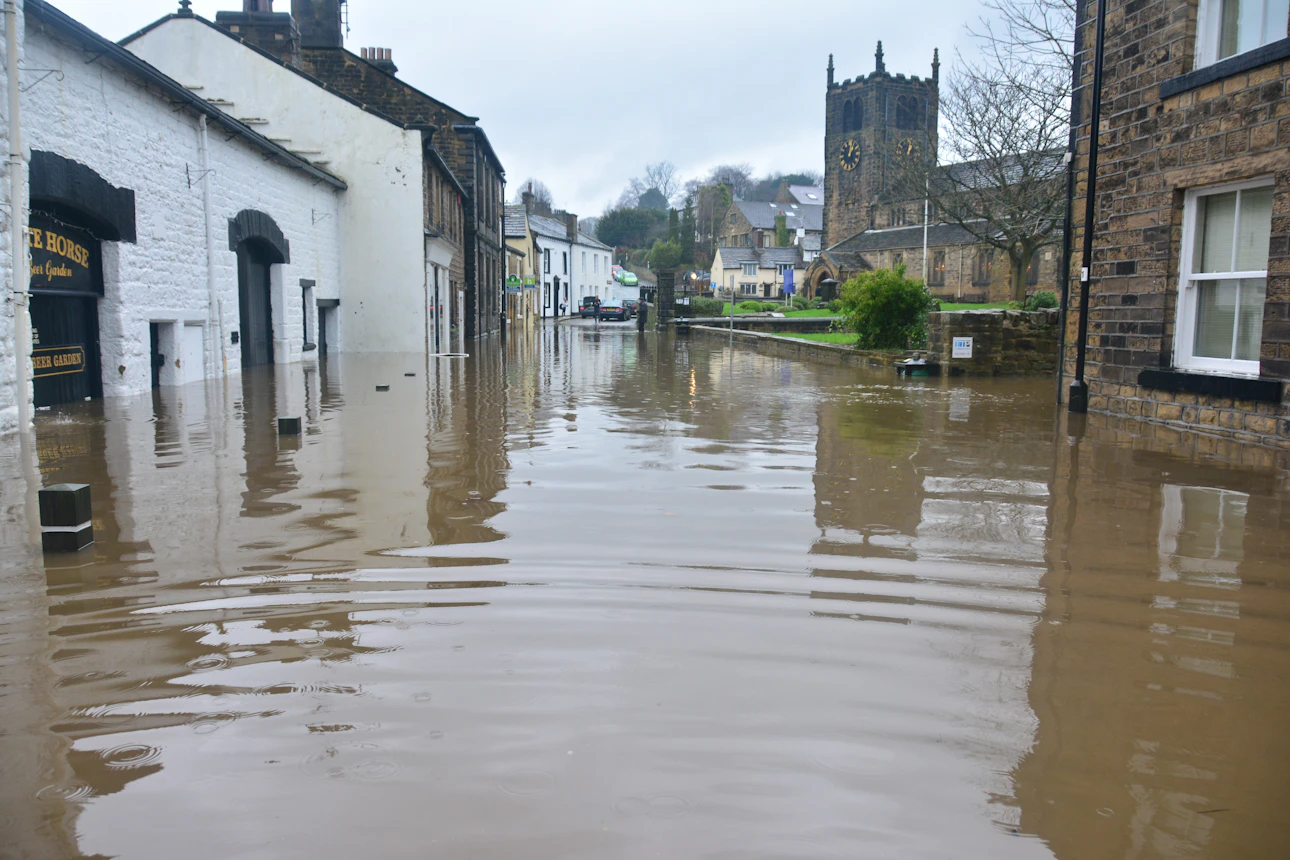
On September 28, 2026, Hurricane Polo made landfall on Mexico’s Baja California Sur before weakening and dissipating over northern Mexico. Normally that would be the end of the story for U.S. readers: except a hurricane’s remnant moisture doesn’t stop at a coastline. Since Polo came ashore, the leftover moisture from the storm has driven a significant, multi-state flash-flood threat across the U.S. Southwest and Central Plains, tracked day by day by national outlets.
The most acute moment came in Doña Ana County, New Mexico, where days of heavy rain pushed the McLeod Dam near the town of Hatch toward the brink of failure. County officials issued evacuation orders for five nearby communities (Salem, Garfield, Hatch, Placitas, and Rincon) and hundreds of residents left on short notice. The dam held. Orders were lifted within about a day, no deaths or injuries were reported, and only some minor property damage was reported in the area. It’s a good outcome, and also a real, recent example of exactly the scenario this guide is about: an evacuation order with very little runway, for ordinary households who had no reason to expect that particular week to be the one they’d need to leave.
Meanwhile, a related part of the same weather pattern is now pushing into Texas. The National Weather Service issued a Flood Watch covering much of South Central Texas (including the Dallas-Fort Worth, Austin, and San Antonio areas) running from Wednesday evening through Friday evening, warning that a cold front could bring periods of heavy rainfall and life-threatening flash flooding.
None of this is cause for panic, and it isn’t a forecast of disaster: it’s a prompt. Most households have thought about what to pack for an emergency. Far fewer have thought through what happens in the gap between “there’s a flood watch out” and “an officer is telling me to leave in the next ten minutes.” That gap, and exactly what to do at each stage of it, is what this evacuation checklist covers.
Quick Verdict
Reader-supported: I may earn a commission if you buy through links on this page, at no extra cost to you. Disclosure.
Quick Verdict: Evacuation Checklist Essentials
Breakwater Supply or 3V Gear Evacuation Pack
A bag that’s already packed and by the door beats assembling one while water is rising. Sized for about 72 hours, pre-loaded with a change of clothes, basic toiletries, chargers, and a flashlight.
HydraPak Reservoir + Aquatabs
Safe water on the way out, and a way to treat your own tap water once you’re back and not yet sure it’s clean.
Flood Watch vs. Flood Warning vs. Evacuation Order
A lot of people treat these three terms as interchangeable. They’re not, and knowing the difference is what lets you use the checklist below instead of waiting for a signal that was never coming in that exact wording.
- Flood Watch: issued by the National Weather Service. Conditions are favorable for flooding, but nothing is happening yet. This is a “pay attention and get ready” signal, typically issued hours to a couple of days ahead of the weather itself.
- Flood Warning: also issued by the National Weather Service, and more urgent. Flooding is occurring or about to occur. This is a “take action now” signal, and the window between a warning and actual rising water can be very short, sometimes under an hour for flash flooding.
- Evacuation Order (or Advisory): issued by local or county emergency officials, not the National Weather Service. This isn’t a weather forecast at all; it’s a direct instruction about a specific dam, levee, neighborhood, or waterway that officials have judged dangerous enough to clear. An “advisory” generally means evacuation is strongly recommended; an “order” means officials are directing you to leave, though actual enforcement varies by state and county.
The McLeod Dam situation followed exactly this sequence: a period of flood watches and warnings for the broader region, then a separate, specific evacuation order for the handful of communities closest to the dam itself. That’s the normal pattern. A weather alert tells you flooding is possible somewhere; an evacuation order tells you it’s time to leave a specific place.
Here’s why that order deserves to be obeyed immediately rather than weighed against how things look outside your window: evacuating and being wrong costs you an inconvenient night somewhere else. Waiting and being wrong can cost far more. Officials who order an evacuation are usually working from data most residents don’t have access to (rainfall totals, river gauges, structural readings on a dam or levee) and they typically build in a safety margin, issuing the order before the worst-case outcome is certain, not after. The multi-day rain near Hatch gave county officials time to watch the situation closely; it didn’t mean residents were guaranteed multiple days of notice before any actual failure. A flood or dam threat can build slowly for days and still resolve, one way or the other, in a matter of minutes.
Your Evacuation Checklist, By How Much Time You Have
This is the core of the guide. Instead of one long list, it’s broken into three tiers that match how evacuation unfolds, because what’s reasonable to do with days of warning is not what’s reasonable with minutes.
| Alert You’ve Heard | What It Means | Typical Time Window | What To Do Right Now |
|---|---|---|---|
| Flood Watch | Flooding is possible in your area | Hours to a few days | Review your plan, charge devices, check go-bags, fuel the car, check on neighbors |
| Flood Warning | Flooding is happening or imminent | Minutes to a few hours | Grab-and-go bag ready, meds and documents staged, tell your out-of-area contact your plan |
| Evacuation Order | Officials are telling you to leave now | Minutes | Leave immediately: don’t pack, don’t drive through water, take only what’s already staged |
You Have Days (A Flood Watch Is Up)
This is the easiest tier to waste, because nothing feels urgent yet. Use the time anyway:
- Review your household’s actual evacuation plan: two routes out of your area, including one you don’t normally drive.
- Charge phones, power banks, and any lantern or radio you’d take with you.
- Pull your grab-and-go bag out and check it, rather than assuming it’s still complete from last time.
- Check on neighbors, relatives, or anyone nearby with mobility or medical needs. This is the tier where you still have time to help someone else prepare.
- Fuel up the car. Gas stations near an evacuation zone empty out fast once a warning hits, and you don’t want to be looking for a working pump during the warning tier.
- Confirm you know where pet carriers, leashes, and livestock trailers are.
You Have Hours (A Flood Warning or Evacuation Advisory Is Issued)
Treat this as the real deadline, not the evacuation order itself.
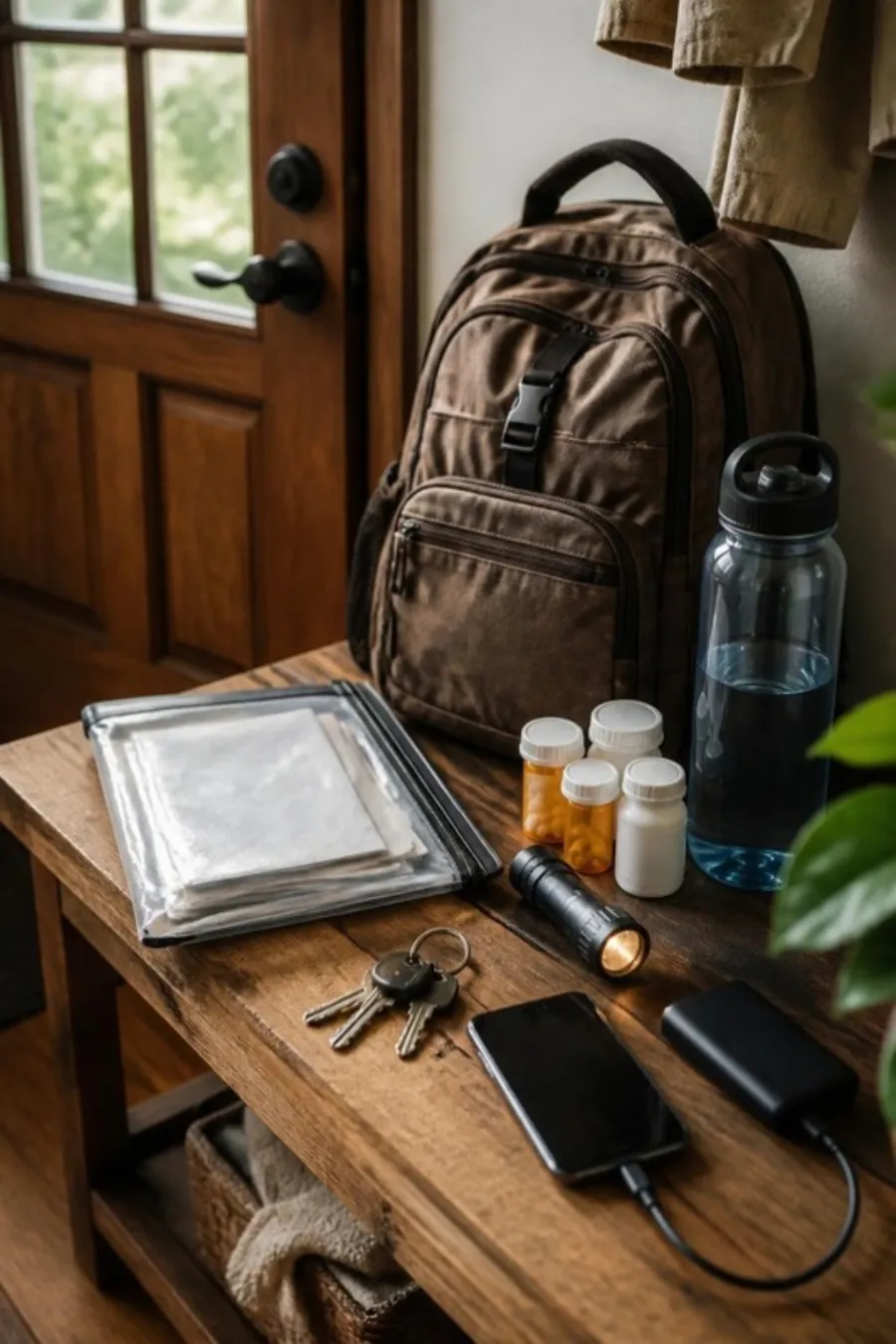
- Finish packing the grab-and-go bag: medications (with a few days’ extra supply), copies of ID and insurance documents, a change of clothes, and cash in small bills.
- A compact first-aid kit built for an evacuation scenario belongs in the bag now, not after you’ve already left.
- Confirm your pet or livestock plan is executable in the time you have left (see the section below).
- If there’s genuinely time and it’s safe to do so, shut off gas and water at the main if local guidance recommends it for your specific flood risk.
- Tell someone outside the area where you’re going and roughly when you expect to arrive.
- Stop watching the news for updates and start moving toward “ready to walk out the door”. This is the tier where people most often run out the clock.
You Have Minutes (An Evacuation Order Is Issued, or Water Is Already Rising)
There is exactly one job in this tier: leave.
- Do not stop to pack anything that isn’t already staged by the door.
- Do not drive through moving or flooded water, even if your normal route requires it: see the next section.
- Take the people, pets, and bag you already have ready, and go.
- If you’re on foot and water is rising around you, move to higher ground immediately rather than trying to outrun the water on flat terrain.
- If you’re caught in rising water and trapped, call emergency services and give your exact location rather than waiting to see if it recedes on its own.
Turn Around, Don’t Drown
This is the National Weather Service’s own long-running public safety message, and it deserves to stand on its own rather than get buried in a bullet point: most flood deaths happen in vehicles, from people driving into water they underestimated.
The numbers are the reason the message exists. As little as six inches of moving water can knock an adult off their feet. Roughly twelve inches of moving water can float most passenger cars, and once a vehicle is floating, the driver no longer controls where it goes. Floodwater also routinely hides what’s underneath it: a washed-out road, a missing manhole cover, a downed line. “It looks shallow” is not information you can trust, especially at night or in rain.
If a road ahead of you is covered in water, the only correct move is to turn around and find another route, even if that means a longer drive or arriving later than planned. If you’re already caught in rising water in your vehicle and it starts to float or stall, get out and move to higher ground rather than staying with the car. Know your evacuation routes in advance specifically so you’re less likely to be forced into a last-second decision about a crossing you’ve never evaluated before.
Pets, Livestock, and People Who Need More Time
Pets and Livestock
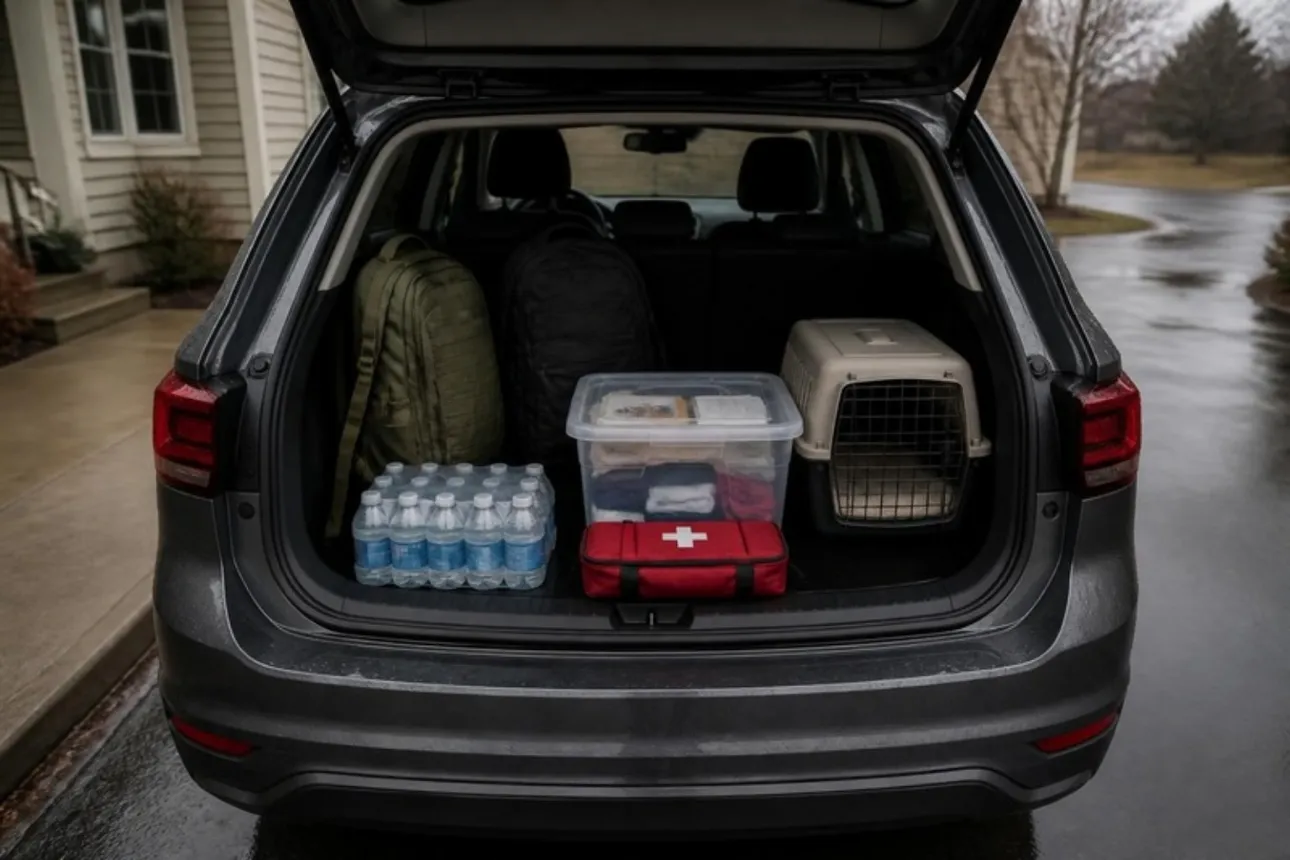
Agricultural communities like the Hatch Valley area in New Mexico, where this month’s evacuation orders were centered, are a reminder that animals don’t evacuate themselves. If you have pets, keep carriers, leashes, and a few days of food staged with your own go-bag, and know in advance which shelters along your evacuation route accept animals. Not every emergency shelter does. If you have livestock, build the plan during the “days” tier above: know your trailer’s working condition, know a destination with space and water for the animals, and know that loading large or skittish animals under pressure takes far longer than it does on a calm afternoon. Waiting until the warning tier to figure out livestock transport is one of the most common and most avoidable mistakes in a flood evacuation.
Household Members Who Need More Time
Anyone in your household, or a neighbor you’ve agreed to check on, who has limited mobility, relies on medical equipment, or needs extra time to move safely should be factored in at the “days” tier, not discovered during the “minutes” tier. That means confirming transportation that accommodates them, packing backup power for any medical device that needs it, keeping at least a week’s supply of medications on hand rather than just a day’s dose, and building in extra lead time. Where available, registering in advance with your county’s emergency management office can help first responders know to check on or assist a specific address during an evacuation order. If you’re the one who might need that extra time, say so to whoever you’d evacuate with, well before a watch is ever issued.
Returning Home Safely
When an evacuation order is lifted (as the Hatch Valley orders were, within roughly a day) the instinct is to go straight home. Resist that until officials have confirmed it’s safe. Water that has visibly receded is not the same as an all-clear.
- Wait for the official all-clear for your specific area, even if the water is gone and other people are heading back.
- Watch for washed-out roads, undermined pavement, and weakened structures on your way back. A road that looked fine on the way out may not be fine on the way back.
- Treat any standing water as contaminated until you know otherwise. Floodwater can carry sewage, chemicals, and debris even when it looks clear, so keep kids and pets away from it.
- Don’t trust the tap water automatically. If there’s a boil-water notice, or even if there isn’t one yet but your area was near flooding, treat your tap water (a water filter or purification tablets work well here) until local authorities confirm the municipal supply or your well is clear.
- Document any damage before you start cleanup: photos and video of anything affected, for insurance purposes, before you move or discard items.
- Check in with your out-of-area contact once you’re safely home, so the rest of your network isn’t left wondering.
Free Updates
I send an email when something’s genuinely worth your time: a new guide, a real price drop on something I recommend, or an actual safety alert. No spam, no daily digest, unsubscribe anytime.
If you’re building out the rest of your plan rather than just this one scenario, my flash flood safety checklist covers the broader readiness side of this same risk, and my go-bag guide breaks down what should already be packed before a watch ever turns into an order.
FAQ
What’s the difference between a flood watch and a flood warning?
A flood watch means conditions are favorable for flooding in your area: it’s a heads-up, not a certainty, usually issued hours to a couple of days ahead. A flood warning means flooding is already happening or is about to happen very soon, and it calls for immediate action rather than ongoing monitoring.
Should I evacuate for a flood watch, or wait for a warning?
You generally don’t need to evacuate on a watch alone: a watch is your signal to get ready, not to leave. But if you have a long evacuation ahead of you, live near a specific dam or waterway with a known history of problems, or have household members who need extra time to move, treat a watch as your cue to start acting rather than waiting for a warning or an official order.
How much warning do you get before a dam failure?
It varies enormously and can be very short: sometimes just hours, as in the McLeod Dam situation near Hatch, New Mexico this week, where days of heavy rain pushed a dam to the point that county officials ordered evacuations with limited lead time. Never assume you’ll get a long warning before a dam-related evacuation order; build your plan as if you might get very little.
Is it safe to drive through a flooded road if it looks shallow?
No. Floodwater hides what’s underneath it (missing pavement, a washed-out shoulder, debris) and even shallow-looking water can be moving fast enough to push a vehicle off the road. As little as 12 inches of moving water can float most cars. Turn around and find another route rather than testing it.
What should I do with pets during a flood evacuation?
Keep carriers, leashes, and a few days of food staged with your own emergency bag so you’re not searching for them under pressure, and research pet-friendly shelters along your evacuation route in advance, since not every shelter accepts animals. For livestock, plan transportation and a destination well before a warning is issued: loading animals calmly takes real time you won’t have once water is rising.
How do I know when it’s safe to go home after a flood?
Wait for local officials to issue an official all-clear for your specific area rather than judging it yourself from the rain stopping. Once you’re cleared to return, watch for washed-out roads and weakened structures, avoid any standing water, and document damage for insurance before you begin cleanup.
Do I need to worry about this if I don’t live near the coast?
Yes. This kind of risk isn’t limited to hurricane-prone coastal areas. The same weather system behind the New Mexico dam evacuation also produced a multi-day flood watch across a large stretch of inland Texas, hundreds of miles from where the storm made landfall. Any area with significant rainfall, nearby waterways, or a dam or levee upstream can face a fast-moving evacuation scenario, regardless of distance from the coast.
The Prep Verdict is reader-supported. If you buy through a link on this page, I may earn a commission at no extra cost to you. See my full disclosure for details. I only recommend products I’d put in my own emergency supplies.