Picture a garage on a Saturday afternoon. Someone’s ripping a board on a table saw, the wood kicks back, and a hand goes where it shouldn’t. Someone else grabs a clean towel and presses hard, and it soaks through in under a minute. There’s nothing else in that garage built for bleeding like that.
That’s the kind of moment this article is about, and it’s a lot more likely to happen to you than anything involving a natural disaster. A slipped kitchen knife that goes deeper than it should. A jack that lets go while someone’s got an arm near the wheel well. A kid who comes off a bike wrong and lands on a piece of rebar sticking out of a fence post. None of these are exotic. They happen in driveways, kitchens, and garages every day, and none of them require a hurricane or a blackout to matter.
Here’s the part that doesn’t get talked about enough: a bleeding injury severe enough to hit an artery can cause someone to lose a life-threatening amount of blood in a handful of minutes: faster than most people can get to an emergency room, and faster than most people expect. This is the entire premise behind Stop the Bleed, the national bleeding-control campaign the American College of Surgeons Committee on Trauma launched in 2015: uncontrolled severe bleeding is one of the most preventable causes of death from an injury, and the people most likely to save a life in those first few minutes are ordinary bystanders, not first responders.
Here’s what most people don’t find out until the moment they need it: the first aid kit hanging in most garages isn’t built for this. It’s built for splinters, cuts, and scrapes, not for bleeding that won’t stop with pressure and gauze. As a medic and Stop the Bleed instructor, this is the gap I most want people to know about before they ever need to. Closing it is what this article is about.
I looked at every category of tourniquet on the market (genuine windlass designs, elastic wrap-style options, and the flood of cheap look-alikes that show up in bundle kits), and I want to walk you through the comparison that got me to a single recommendation, instead of just asserting it.
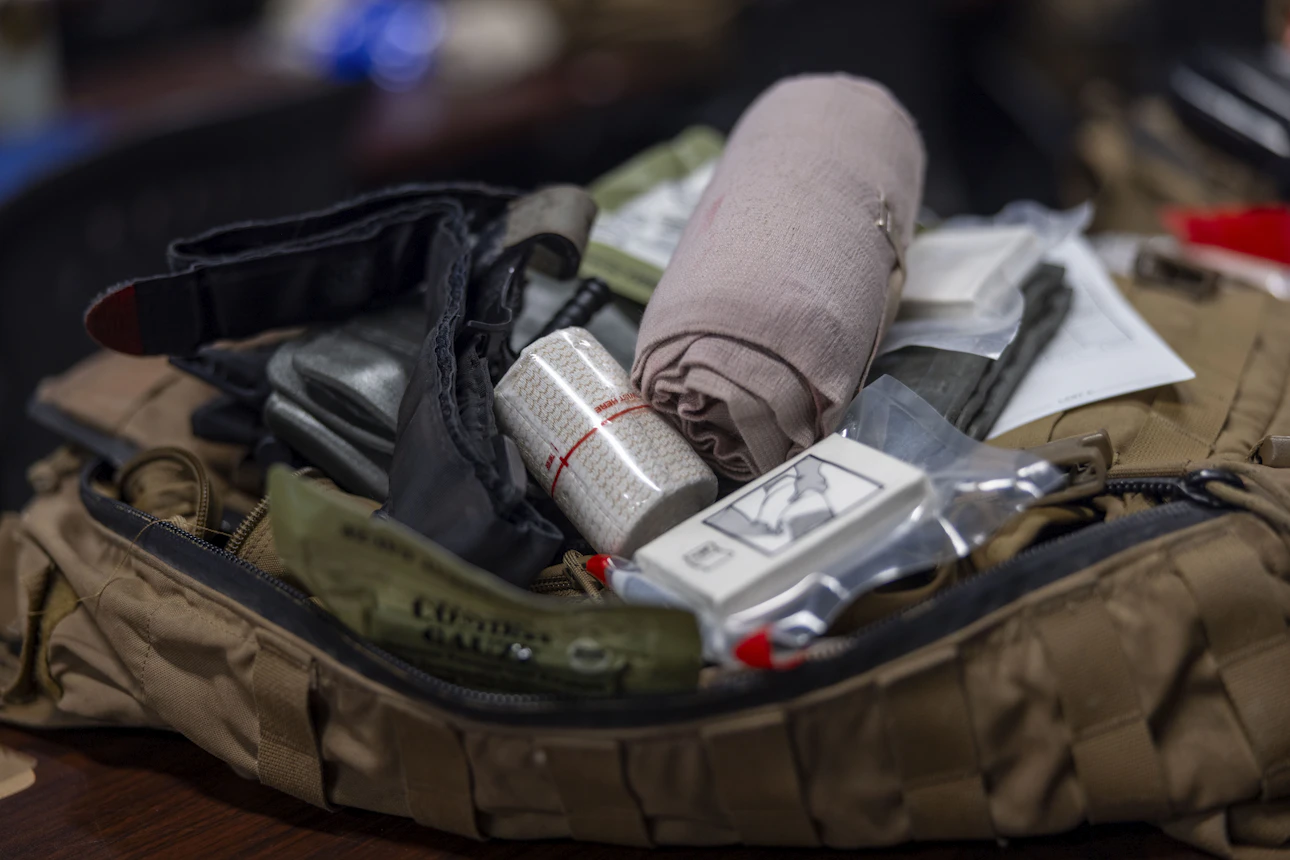
Reader-supported: I may earn a commission if you buy through links on this page, at no extra cost to you. Disclosure.
Quick answer: For most homes, cars and go bags, buy a genuine North American Rescue C-A-T from an authorized seller. It’s on the Department of Defense’s CoTCCC recommended list, it works on an arm or a leg, and it costs about $35. I’ve used it on myself in training and in real life, and I’ve demonstrated it in my classes more times than I can count. The one exception: for a child too small for a C-A-T to tighten, I’d use a SWAT-T.
Quick Verdict: Best Tourniquet for a Home, Family, or Vehicle Trauma Kit
The genuine windlass-style tourniquet used in U.S. military trauma protocols and taught in Stop the Bleed courses nationwide. Mechanically simple, one-handed by design, and sold through a legitimate medical retailer so you know you’re getting the real thing. $34.99 at Mountain Man Medical. This is the tourniquet I recommend for adults and most kids.
My pick only for a baby or young toddler whose arm or leg is too small for a C-A-T to tighten. I’ve used it in training many times and it works, but it’s harder to put on yourself than a C-A-T, so it’s never my adult pick.
- Why most household first aid kits fall short
- What the research says
- The framework I use to evaluate any tourniquet
- Head-to-head: windlass vs. elastic vs. improvised tourniquets
- The counterfeit-CAT problem, and why where you buy matters
- My recommendation: the North American Rescue C-A-T
- Why I only stand behind one tourniquet
- What about kids?
- Where to keep one
- Bottom line
- Sources
- FAQ
Free Updates
I send an email when something’s genuinely worth your time: a new guide, a real price drop on something I recommend, or an actual safety alert. No spam, no daily digest, unsubscribe anytime.
Why most household first aid kits fall short
Open up a typical drugstore first aid kit and you’ll find adhesive bandages, some gauze pads, antiseptic wipes, maybe a roll of medical tape. That’s a good kit for what it’s designed for: small cuts, blisters, minor scrapes. It was never designed to handle a wound where blood is flowing faster than a bandage can absorb it.
Standard gauze works by helping blood clot at the surface. It relies on the body’s own clotting process and on the wound being small enough, and slow-bleeding enough, for pressure and a dressing to do the job. Severe bleeding from a deep laceration or an injury involving a major blood vessel doesn’t play by those rules: direct pressure alone can fail to keep up, especially if the person applying it is alone, in shock, or has to let go to call for help. A tourniquet isn’t a bigger bandage. It’s a completely different tool, designed to physically stop blood flow to a limb entirely, mechanically, without depending on clotting or continuous hand pressure.
What the research says
In a large study of 2,838 casualties with major limb injuries, survival was 90% when a tourniquet went on before the person went into shock, versus 10% when it went on after. Of the 5 patients who needed a tourniquet and didn’t get one, none survived. (Kragh et al., Annals of Surgery, 2009. It’s an observational study, so it shows a strong association, not proof.)
Plain version: a tourniquet works best when it goes on early, which is why it belongs in your kit, not in a store an hour away.
The framework I use to evaluate any tourniquet
Before you look at the comparison table below, it helps to know what I’m checking for. This is the same filter I’d apply to any product in this category, including ones I haven’t reviewed:
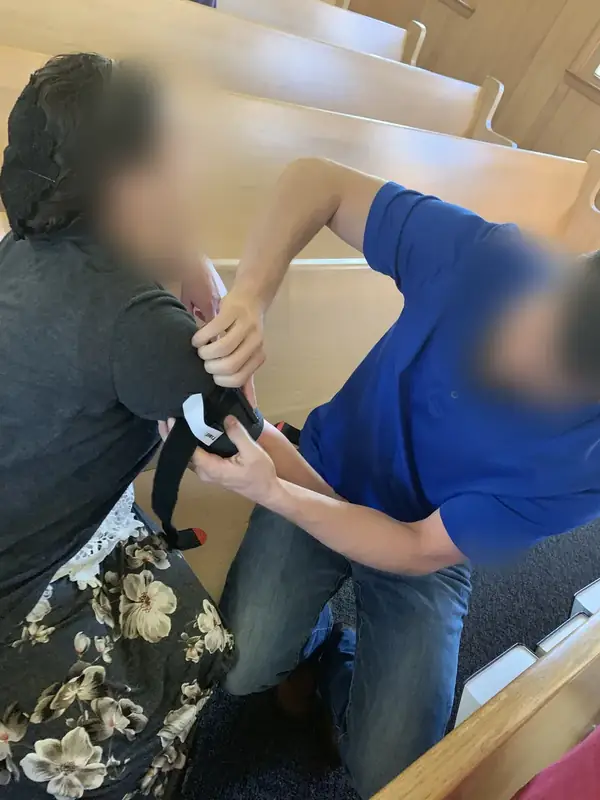
- Does it have a genuine windlass and a real locking bar? If a product relies purely on elastic tension or a “twist and tuck” design with no dedicated locking hardware, it’s a compression wrap wearing a tourniquet’s marketing. Not a trauma tourniquet.
- Can it realistically be applied one-handed? A meaningful share of tourniquet use involves an injury to the arm, which means the person applying it, often the injured person themselves, may only have one working hand.
- Is authenticity verifiable? Because the windlass-and-locking-bar design has been widely copied, the question isn’t just “is this a good design”. It’s “can I confirm this specific unit came from a legitimate medical-supply source.”
- What’s the strap made of, and how wide is it? A narrower band concentrates pressure over a smaller area, which is both less effective at full occlusion and more likely to cause tissue damage at the site. The genuine C-A-T uses a 1.5-inch nylon webbing strap for a reason.
- Does it require training to use correctly? Every real tourniquet does. I don’t see that as a downside: a product that claims you can use it effectively with zero preparation is usually a product that isn’t strong enough to need real technique in the first place.
Head-to-head: windlass vs. elastic vs. improvised tourniquets
Here’s how the three main categories compare on the factors that matter in a real bleeding emergency. Not marketing copy, but application speed, whether you can realistically apply it one-handed on yourself, how it holds up once real pressure is on the line, how much training it requires, and where it lands on price.
| Factor | Windlass (CAT-style) | Windlass (SOF-T-style) | Elastic/Wrap-Style (e.g. SWAT-T) | Improvised/Novelty |
|---|---|---|---|---|
| Application speed | Fast once practiced: single strap, hook-and-loop band, windlass rod, clip. Designed for rapid application under stress. | Fast, but the friction-buckle routing on some SOF-T designs has a slightly steeper first-time learning curve than CAT’s hook-and-loop band. | Moderate. No buckle or windlass to route, but achieving and maintaining full arterial occlusion by wrapping and tucking takes more practice to get right quickly. | Slow and inconsistent. No purpose-built mechanism means improvising both the constricting band and the tightening method on the spot. |
| One-handed / self-application | Yes. This is a design requirement the C-A-T was built around, specifically so an injured person can self-apply. | Yes, generally, though some users find the buckle routing harder to manage one-handed than the C-A-T’s simpler band-and-hook system. | Possible with practice, but wrapping tightly enough for true occlusion with one hand is meaningfully harder than with a rigid windlass. | Very difficult: most improvised methods assume two functioning hands and a helper. |
| Reliability under real pressure | High: the rigid windlass mechanically locks in place once twisted, holding occlusion pressure without the user having to maintain tension by hand. | High: same core windlass principle, comparable reliability once correctly applied. | Moderate: depends entirely on how tightly and how many wraps were applied; more prone to loosening or under-tightening than a locked windlass. | Low and unpredictable: improvised bands can slip, snap, or fail to reach true arterial occlusion, and there’s no locking mechanism to hold pressure. |
| Training curve | Low-moderate. This is the design most Stop the Bleed courses and first-aid instruction use, so training resources and muscle-memory practice materials are widely available. | Low-moderate: same underlying skill (windlass twist-and-lock), slightly different routing to learn. | Moderate: the technique (wrap, tension, tuck) is less standardized across training programs, so fewer people have practiced it specifically. | High and unreliable: there’s no consistent “technique” to train on, which is itself the core problem. |
| Price tier | Budget-to-mid: $34.99 for a genuine unit from a legitimate medical retailer. | Mid: typically a comparable or somewhat higher price point than the C-A-T. | Budget: inexpensive, compact, and light, which is part of its appeal as a secondary or backup unit. | Effectively free (improvised from materials on hand), but “free” isn’t a meaningful advantage when reliability is this inconsistent. |
Reading straight across that table, the case for a genuine windlass tourniquet as the default choice for a household kit makes itself: it’s the fastest to apply correctly, the most realistic to self-apply one-handed, the most reliable once pressure is on the line, and the design most civilian bleeding-control training is already built around. SWAT-T and similar elastic designs work, and they have one real role (small children, more on that below), but they’re harder to put on yourself and not the one I’d want to be reaching for first in a genuine emergency. Improvised options belong in the “better than nothing if it’s truly your only option” category, not on a shopping list.
Both CAT-style and SOF-T-style windlass tourniquets are real, widely used designs with strong reputations in trauma medicine, and you’ll see reasonable people prefer either one. I’m not covering SOF-T further in this article because it isn’t the product I sell or link to here. My recommendation below is specific to the C-A-T, for reasons I’ll get into.
The counterfeit-CAT problem, and why where you buy matters
Here’s something that doesn’t get talked about enough: counterfeit C-A-T tourniquets are a real, documented problem, not a theoretical one. North American Rescue and CAT Resources pursued a formal case with the U.S. International Trade Commission over counterfeit units, manufactured overseas and sold through third-party marketplace listings, that were reaching first responders and consumers and were, in NAR’s own words, “known to break” under real load. The case resulted in a General Exclusion Order that authorizes U.S. Customs and Border Protection to search incoming cargo and seize any product that appears to be a counterfeit C-A-T at the border. Genuine C-A-T tourniquets are manufactured only in the United States, which is exactly why any version claiming to be one that’s imported from overseas is a red flag.
A tourniquet that fails at the moment it’s needed most isn’t a minor product defect; it’s the entire reason the product exists, not working. This is exactly why I don’t just recommend “a C-A-T tourniquet” in the abstract: I recommend buying it from a specific, legitimate medical-equipment retailer rather than gambling on the cheapest listing you can find. Mountain Man Medical sells the genuine North American Rescue C-A-T, and it’s run by a founder with real military trauma-medicine training behind the product selection: a meaningful credibility signal when the entire point of the purchase is trusting that the device will work under real pressure.
My recommendation: the North American Rescue C-A-T
The genuine North American Rescue Combat Application Tourniquet (C-A-T), sold through Mountain Man Medical, is the tourniquet I recommend for adults and most kids.
North American Rescue is the manufacturer whose tourniquet is recommended by the Committee on Tactical Combat Casualty Care (CoTCCC) and is widely carried on EMS units and in hospital trauma bags. That track record isn’t a tactical selling point. It’s the same reason a lot of the gear in your car’s emergency kit or your home’s smoke detectors follows standards set by people whose job is literally to keep people alive in worst-case moments. It uses a 1.5-inch nylon webbing strap and a free-moving internal band designed to distribute pressure evenly and avoid the pressure spikes that thinner or cheaper straps produce.
At $34.99, it’s genuinely inexpensive for what it is, and unlike a lot of preparedness gear, it doesn’t require a subscription, an app, or batteries. It sits in a bag until the one day you need it, and then it just works.
This is the tourniquet I carry myself: a tourniquet is the one item I make sure is always on me, and the North American Rescue C-A-T is the one I trust for that job.
Check Price: North American Rescue Tourniquet
Watch: how I put a C-A-T on
Here is the whole process in under a minute, demonstrated on my own arm.
Why I only stand behind one tourniquet
I compare trauma kits in my Mountain Man Medical Sweetwater vs. Yellowstone comparison. On tourniquets, my policy is narrower and simpler: the North American Rescue C-A-T, sold through a legitimate retailer, is the tourniquet I recommend for adults and most kids. I don’t recommend house-brand tourniquets that are not on the CoTCCC list, even when they come bundled in a first aid kit. I’ve chosen to stand behind a single, well-established design rather than spread a recommendation across multiple tourniquet products.
What about kids?
Most kids don’t need a special tourniquet. Studies found the C-A-T fully stopped blood flow on children’s arms and legs as young as about age 2 (Kelly and Levy, 2020), and on 100% of arms and 93% of thighs in kids 6 to 16 (Harcke et al., Pediatrics, 2019). Where it falls short is a limb too small for it to tighten, like a baby’s or young toddler’s arm.
That’s the only case where I’d reach for a SWAT-T, a flat elastic wrap that can be stretched snug around a small limb. I’ve used it in training many times and it works. But it’s harder to put on yourself with one hand than a C-A-T, which is why it’s never my pick for adults. If you have very young kids, carry one alongside your C-A-T, not instead of it.
Where to keep one
A tourniquet only helps if it’s within reach in the first sixty seconds of an emergency, which means one is rarely enough if you want real coverage. I’d think about it in terms of the places where the scenarios at the start of this article happen:
- Your vehicle. Car accidents, roadside tire changes, and jack failures happen on the road, not at home. Keep one in the glovebox or center console, not buried in a trunk bag.
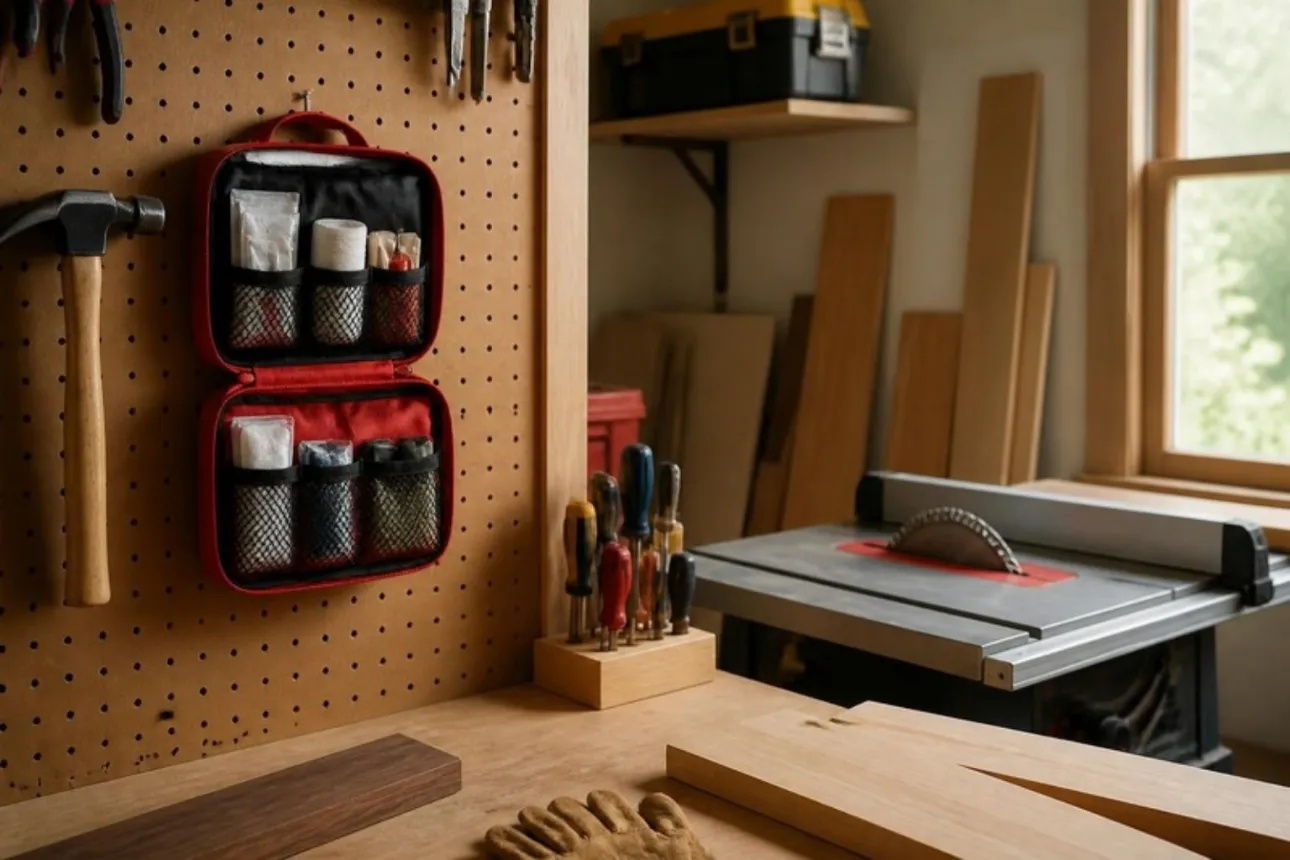
- Your home, ideally near tools. If you have a garage workshop, a kitchen where you do a lot of knife work, or a yard with power equipment, keep one somewhere fast to grab near where those activities happen. Not locked in a closet upstairs.
- An EDC or everyday bag. If you carry a backpack, work bag, or diaper bag daily, a flat-packed C-A-T tourniquet adds minimal bulk and means you’re not dependent on being near your car or house when something happens.
The C-A-T packs flat and is compact enough that “I don’t have room for it” isn’t a real obstacle in any of these locations.
Bottom line
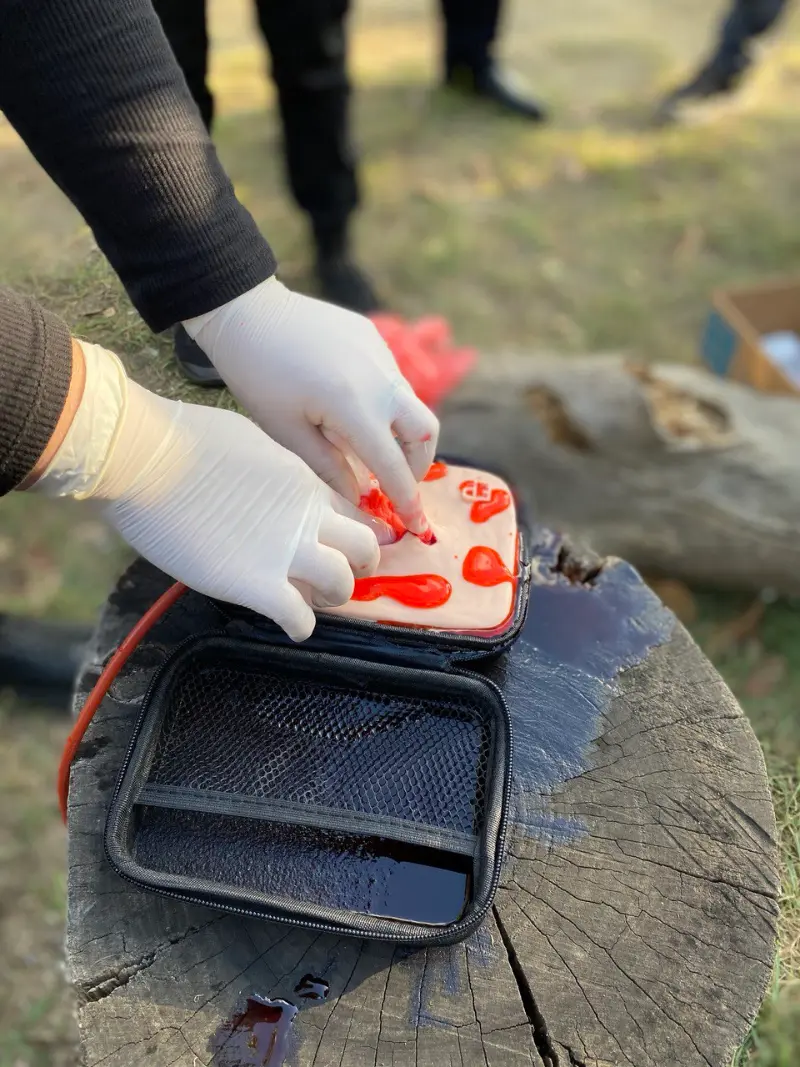
If you’re buying one tourniquet for your home, your car, or a family member’s kit, buy a genuine windlass-style tourniquet, not an elastic wrap or an improvised option, and buy it from a retailer you can trust to be selling the real thing. That’s the North American Rescue C-A-T through Mountain Man Medical. If you have a baby or young toddler, add a SWAT-T for a limb too small for the C-A-T to tighten, alongside the C-A-T, not instead of it. Then, regardless of what you buy, take a short Stop the Bleed course or equivalent training. The best tourniquet in the world doesn’t help anyone if the first time it’s used is also the first time it’s ever been out of the packaging.
Check Price: North American Rescue Tourniquet
Free Updates
I send an email when something’s genuinely worth your time: a new guide, a real price drop on something I recommend, or an actual safety alert. No spam, no daily digest, unsubscribe anytime.
Sources
- Kragh JF Jr. et al. “Survival with emergency tourniquet use to stop bleeding in major limb trauma.” Annals of Surgery, 2009;249(1):1-7. Read the study
- Harcke HT et al. “Adult Tourniquet for Use in School-Age Emergencies.” Pediatrics, 2019;143(6):e20183447. PubMed
- Kelly JR, Levy MJ. “Effectiveness of the Combat Application Tourniquet for Arterial Occlusion in Young Children.” Journal of Trauma and Acute Care Surgery, 2020.
- DoD Stop the Bleed: Tourniquets (CoTCCC recommended devices)
- Stop the Bleed, American College of Surgeons
FAQ
Is a CAT tourniquet better than a SWAT-T?
For adults, yes. A genuine windlass-style C-A-T gives more reliable, mechanically locked pressure, and it’s easier to put on yourself one-handed. I’ve used the SWAT-T in training many times and it works, but it’s harder to apply to yourself in a self-rescue situation. The only time I’d pick a SWAT-T is for a child too small for a C-A-T to tighten.
Can you use a CAT tourniquet on a child?
Usually, yes. In studies, the C-A-T fully stopped blood flow in children’s arms and legs from about age 2 up through the teens. For a baby or young toddler whose limb is too small for the C-A-T to tighten, I’d use a SWAT-T instead.
Are tourniquets legal to own?
Yes. A trauma tourniquet is a medical device, not a weapon, and it’s sold openly at pharmacies, sporting goods stores, and medical suppliers nationwide as a standard part of Stop the Bleed kits distributed in schools, airports, and public buildings. I couldn’t find any state that restricts civilian purchase or ownership.
How do I know a CAT tourniquet is genuine?
Buy from a legitimate, established medical-equipment retailer rather than an unverified third-party marketplace listing, and be skeptical of prices well below the typical retail range: that’s one of the more common signs of a counterfeit. Genuine C-A-T tourniquets are manufactured only in the United States. This is the specific reason I link to a known retailer (Mountain Man Medical) rather than a generic marketplace search.
Do I need training to use one?
You don’t need training to own one, but you should absolutely get some before you need to rely on it. A short Stop the Bleed course (often free, offered nationwide) covers correct tourniquet placement and application in under an hour and meaningfully improves how fast and correctly you’ll apply it under real stress. If you’re near Vancouver, WA or Portland, OR, I teach hands-on Stop the Bleed and first aid classes for individuals and groups.
How often should I replace it?
According to North American Rescue’s own guidance, a genuine C-A-T has no fixed shelf life as long as it stays unused, in its original packaging, and stored somewhere dry, dark, and climate-controlled: avoid leaving it somewhere it’s exposed to extreme heat, cold, or direct sun for long periods. It’s a single-use device: once it’s been applied, it should be retired and replaced, not reused. Inspect it at least once a year for UV discoloration, fraying at the edges, loose stitching, or a windlass that doesn’t lock securely, and replace it if you see any of those signs.
The Prep Verdict is reader-supported. If you buy through a link on this page, I may earn a commission at no extra cost to you. See my full disclosure for details. I only recommend products I’d put in my own emergency supplies.