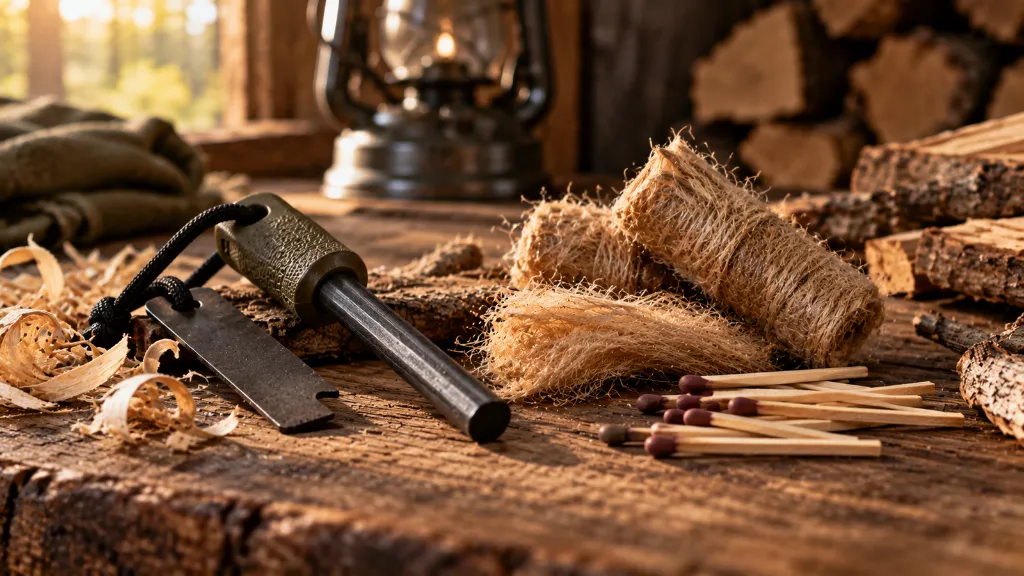
Matches and a lighter are not an emergency fire plan: they’re the first item in one. Both fail in exactly the conditions where you’d need fire most: wet hands, wind, cold-numbed fingers, a lighter that’s been sitting unused in a drawer for two years. A real fire-starting kit isn’t about owning one clever tool, it’s about having redundancy: more than one way to get a flame going, so that when the first method fails (and eventually it will), you’re not standing in the dark figuring it out for the first time. Here’s how I’d think through building that kit, and where a dedicated fire-starting brand like Black Beard Fire fits into it.
Reader-supported: I may earn a commission if you buy through links on this page, at no extra cost to you. Disclosure.
Quick Verdict: Best Fire Starters for Emergency Preparedness
A ferro-rod-style or purpose-built weatherproof stick as the core of your kit, paired with strike-anywhere matches and a basic lighter as backup: covers the reliability gap that any single method leaves open.
Kept sealed and separate from your everyday lighter, specifically for the scenario where everything else in the house is already damp or your hands are too cold to work a striker cleanly.
Free Updates
I send an email when something’s genuinely worth your time: a new guide, a real price drop on something I recommend, or an actual safety alert. No spam, no daily digest, unsubscribe anytime.
Why “just keep a lighter around” isn’t a real plan
A disposable lighter is cheap, familiar, and genuinely useful: right up until it isn’t. Butane lighters struggle in cold temperatures, can flood or clog, and a Bic that’s worked fine in a kitchen drawer for years can fail the one time it’s cold, wet, and windy outside. Matches have the opposite problem: they’re simple and reliable when dry, and functionally useless the moment they’re not. A soaked matchbook is dead weight, not a backup plan. Neither failure mode is a knock on either product. It’s the reason no single fire-starting method should be your only one.
| Method | Reliability in Wet/Cold Conditions | Ease of Use Under Stress | Shelf Life & Storage | Best Role in a Kit |
|---|---|---|---|---|
| Standard matches | Poor once wet or humid; fine dry | Very easy, no learning curve | Long if kept sealed and dry, ruined instantly if not | Cheap backup, not a primary |
| Disposable butane lighter | Degrades in cold, can flood or run out with no warning | Very easy when working | Butane can evaporate slowly over years, mechanism can gum up unused | Convenient primary for everyday use, not sole emergency reliance |
| Ferro-rod-style fire starter | Excellent: works wet, works cold, unaffected by altitude or fuel evaporation | Moderate, requires practice to strike a spark into tinder reliably under stress | Effectively indefinite, no fuel to expire | The core, most dependable tool in a serious kit |
| Waterproof/weatherproof fire-starter stick or block | Very good: purpose-built to ignite and keep burning in wind/wet conditions | Easy once lit, but still requires an ignition source (match, lighter, or spark) to get going | Long shelf life if sealed | The tinder/fuel layer that makes any ignition source turn into a usable fire |
Black Beard Fire’s current lineup fits the weatherproof-tinder and ferro-rod categories above directly: their Fire Rope (about $12, a single waxed-cord stick rated for roughly 4.5 hours of total burn time across 50+ individual fires) and Fire Plugs (about $15, waterproof and windproof, roughly 8 minutes of burn per plug, sold in packs of 50/150/250) cover the tinder layer, alongside a dedicated ferro-rod product for the ignition layer.
The pattern in that table is the whole argument for this article: no single method wins on every axis. Matches are dead simple until they’re wet. Lighters are effortless until the cold or an empty tank takes them out. A ferro-rod-style starter is nearly indestructible but useless if you’ve never practiced with it. A weatherproof fire-starter stick solves the “will this catch and keep burning” problem but still needs something to light it. A real kit stacks these together rather than betting on one.
The decision framework: four things that matter
1. Reliability in adverse conditions. Ask how the tool performs specifically when wet, cold, or windy. Not how it performs on a calm afternoon in your backyard, which is the condition every fire-starting product looks good in. This is where ferro-rod-style starters and purpose-built weatherproof tinder earn their place over a bare lighter or dry-only matches.
2. Ease of use under stress. A tool that requires fine motor control, patience, or a practiced technique is a liability if you’ve never used it before the moment you need it. Strike-anywhere matches and a working lighter win here on simplicity; a ferro rod demands you’ve practiced striking a spark into tinder at least a few times beforehand, not read about it.
3. Redundancy. One fire-starting method is a single point of failure. The goal isn’t finding “the best” fire starter, it’s building a kit where at least one method still works no matter which condition (wet, cold, windy, or a dead battery-powered option) shows up.
4. Matching the method to the realistic use case. Starting a fire to cook a meal on a covered porch in calm weather is a different problem than getting a fire going in driving rain with numb hands. Buy and pack for the second scenario; the first one takes care of itself.
What each category is for
Ferro-rod-style starters. These strike a shower of sparks by scraping a rod, and they work wet, cold, at altitude, and after years of storage, because there’s no fuel to evaporate or degrade: just metal and friction. The tradeoff is a real learning curve: getting a consistent spark into fine tinder takes practice, and “under stress, for the first time” is the wrong moment to learn. Practice this at home, in easy conditions, before you ever need to rely on it in bad ones.
Waterproof and weatherproof tinder. A spark or flame is only useful if it has something reliable to catch. Wet twigs and damp newspaper are exactly what you’re likely to find in a real outage, and they’re a poor foundation for a first fire attempt. A purpose-built waterproof fire-starter (a treated stick, block, or tinder specifically designed to ignite and keep burning in wind and wet conditions) closes that gap and is often the actual difference between a fire that catches and one that doesn’t.
Matches and lighters as backups, not the whole plan. Both belong in a kit. Neither belongs there alone. Keep matches in a genuinely sealed, waterproof container instead of a junk drawer, and treat a lighter as your convenient, everyday option rather than your only option for a genuine emergency.
Realistic use cases, and the safety caveat that goes with all of them
Cooking without power. An extended outage means no stove, and a reliable outdoor fire-starting setup covers that gap. This is an outdoor-cooking or well-ventilated-appliance use case, not an indoor one: see the safety note below.
Water purification by boiling. If your water situation is uncertain during an outage, boiling is one of the most reliable purification methods available, and it depends entirely on being able to get a fire going reliably, including in bad weather.
Staying warm. A safely built and monitored outdoor fire, or a properly ventilated heat source, can matter during a prolonged cold-weather outage, but this is also where fire-starting gear gets misused most dangerously.
The safety caveat, stated plainly: any open flame used indoors, or any fuel-burning device used without proper ventilation, is a real fire and carbon-monoxide risk, and that risk goes up, not down, during an outage, which is exactly when people are most tempted to improvise indoor heat or cooking. Carbon monoxide is colorless and odorless and builds up fast in a closed-up house. Fire-starting tools in this article are for outdoor use, well-ventilated cooking appliances rated for indoor use, or supervised, properly contained fires: never an improvised indoor flame for heat. These risks are well documented: CPSC’s most recent non-fire carbon-monoxide report attributes roughly 274 estimated deaths a year to consumer products, with engine-driven tools (generators especially) the single largest category, and USFA separately puts accidental non-fire CO deaths at over 150 a year nationally. Keep a basic fire extinguisher and a working smoke/CO detector as a non-negotiable part of any kit that includes fire-starting gear, not an optional add-on.
Building a kit with real redundancy
Don’t buy one fire starter and call it done. A workable kit looks like: a primary ferro-rod-style starter (durable, weather-proof, the core of the kit), a supply of waterproof tinder or fire-starter sticks (so a spark or flame turns into a sustained fire), a sealed, genuinely waterproof container of strike-anywhere matches as backup, and a basic lighter for everyday convenience use, kept separate from the emergency kit so it doesn’t get lost to daily use. Store the whole kit somewhere it will be grabbed in a hurry (with the rest of your outage or go-bag gear, not scattered across kitchen drawers) and check it on the same seasonal schedule you use for batteries and other perishable emergency supplies.
Common mistakes people make with fire-starting gear
Buying a fire starter and never practicing with it. A ferro rod you’ve never struck before is a bad time to learn under stress. Practice at home, in easy conditions, at least a few times.
Relying on a single method. A lighter alone, or matches alone, is one bad-weather day away from failing you completely. Redundancy is the actual point of this article.
Storing matches somewhere that isn’t truly waterproof. A plastic bag is not the same as a sealed, purpose-built waterproof container. Water finds its way into anything that isn’t.
Using fire-starting gear indoors without ventilation. Covered above, and worth repeating: this is the mistake with genuinely serious consequences.
Forgetting the tinder. A spark or flame with nothing dry and combustible to catch does nothing. The ignition source and the tinder are equally important, and most kits shortchange the second one.
Bottom line
No single fire-starting tool covers every condition you might face. That’s the honest starting point, not a reason to buy more gear than you need. A dependable kit pairs a weatherproof, spark-based fire starter as the core with purpose-built waterproof tinder to catch that spark, backed up by sealed matches and an everyday lighter. Black Beard Fire’s weatherproof fire-starting products fit squarely into the categories that matter most here: reliable in wet and cold conditions, built to be the dependable core of a kit rather than a novelty. Practice with whatever you buy before you need it, keep basic fire safety gear alongside it, and treat redundancy, not a single “best” product, as the real goal.
Black Beard Fire: Shop Fire Starters
Free Updates
I send an email when something’s genuinely worth your time: a new guide, a real price drop on something I recommend, or an actual safety alert. No spam, no daily digest, unsubscribe anytime.
Fire is only half of a power-outage plan: for the light side, see my picks for the best emergency lantern for a power outage.
FAQ
Do I really need more than a lighter for emergency fire-starting? For genuine reliability, yes. A lighter is a fine everyday tool, but cold, wet, or mechanical failure can take it out of service with no warning. A dedicated weatherproof fire starter plus a backup method closes that gap.
How hard is it to use a ferro-rod-style fire starter? It takes practice: striking a consistent spark into fine tinder isn’t intuitive the first time. Practice at home a few times in calm conditions before counting on it in a real emergency.
Is it safe to use fire-starting gear indoors during a power outage? Only with a properly ventilated appliance rated for indoor use. An open flame or unventilated fuel-burning device indoors is a genuine fire and carbon-monoxide risk, and that risk increases during an outage, not decreases.
How long do waterproof matches or fire-starter sticks last in storage? Properly sealed, both can last for years, but “properly sealed” is doing real work in that sentence. Check your kit on a seasonal schedule rather than assuming a purchase from years ago is still reliable. Black Beard Fire, for reference, states a 30-year storage life for its Fire Plugs and describes its Fire Rope as having an effectively indefinite shelf life when kept dry: manufacturer claims, not independently verified, so a periodic check is still worth doing.
What’s the single most important thing to get right in a fire-starting kit? Redundancy. Not one great tool, but more than one working method, so a single point of failure (a dead lighter, wet matches) doesn’t leave you without a way to start a fire when you need one.
The Prep Verdict is reader-supported. If you buy through a link on this page, I may earn a commission at no extra cost to you. See my full disclosure for details. I only recommend products I’d put in my own emergency supplies.