I keep canned goods in my stockpile for one reason: they’re the one category of food storage where I don’t have to think much. No mylar bags, no oxygen absorbers, no worrying about a rice bucket picking up moisture. You buy the can, you put it on a shelf, and years later it’s still good. That’s the pitch, and mostly it’s true.
But canned food is also the one category in this whole shelf-life series where getting it wrong costs more than a wasted meal. It’s a real safety issue. Botulism is rare, but it’s also one of the few food-safety risks that can genuinely kill you, and it doesn’t always announce itself with an obvious smell or an ugly-looking can. So this article is going to spend more time than usual on how to tell a can has gone bad, because that section matters more here than the shelf-life numbers do.
The real question people are asking when they search “canned food shelf life” isn’t really “how long does this last”. It’s “is this can I found in the back of my pantry still safe to eat, and how would I know if it wasn’t.” Both questions get answered below, in that order of importance.
Quick Verdict
| Category | Best-Quality Window | Safety Window (undamaged can) |
|---|---|---|
| Low-acid canned goods (vegetables, meat, poultry, fish, soups, stews, beans) | 2–5 years | Indefinite, if the can shows zero signs of damage: see spoilage section |
| High-acid canned goods (tomatoes, fruit, pickled items, juices) | 12–18 months | Indefinite, if the can shows zero signs of damage: quality drops off faster than low-acid |
| Home-canned goods (any type) | ~12 months | Not indefinite the same way: depends entirely on correct processing; low-acid home-canned vegetables carry real botulism risk if processing wasn’t done right |
| Any can showing bulging, deep dents, rust, leaking, spurting, or off smell/color | N/A | Discard immediately: do not taste to check |
Bottom line: Commercially canned food doesn’t really “expire” on a safety timeline as long as the can stays intact, but “best quality” and “safe to eat” are two different clocks, and no amount of shelf life matters if the can is showing any sign it’s been compromised.
Free Updates
I send an email when something’s genuinely worth your time: a new guide, a real price drop on something I recommend, or an actual safety alert. No spam, no daily digest, unsubscribe anytime.
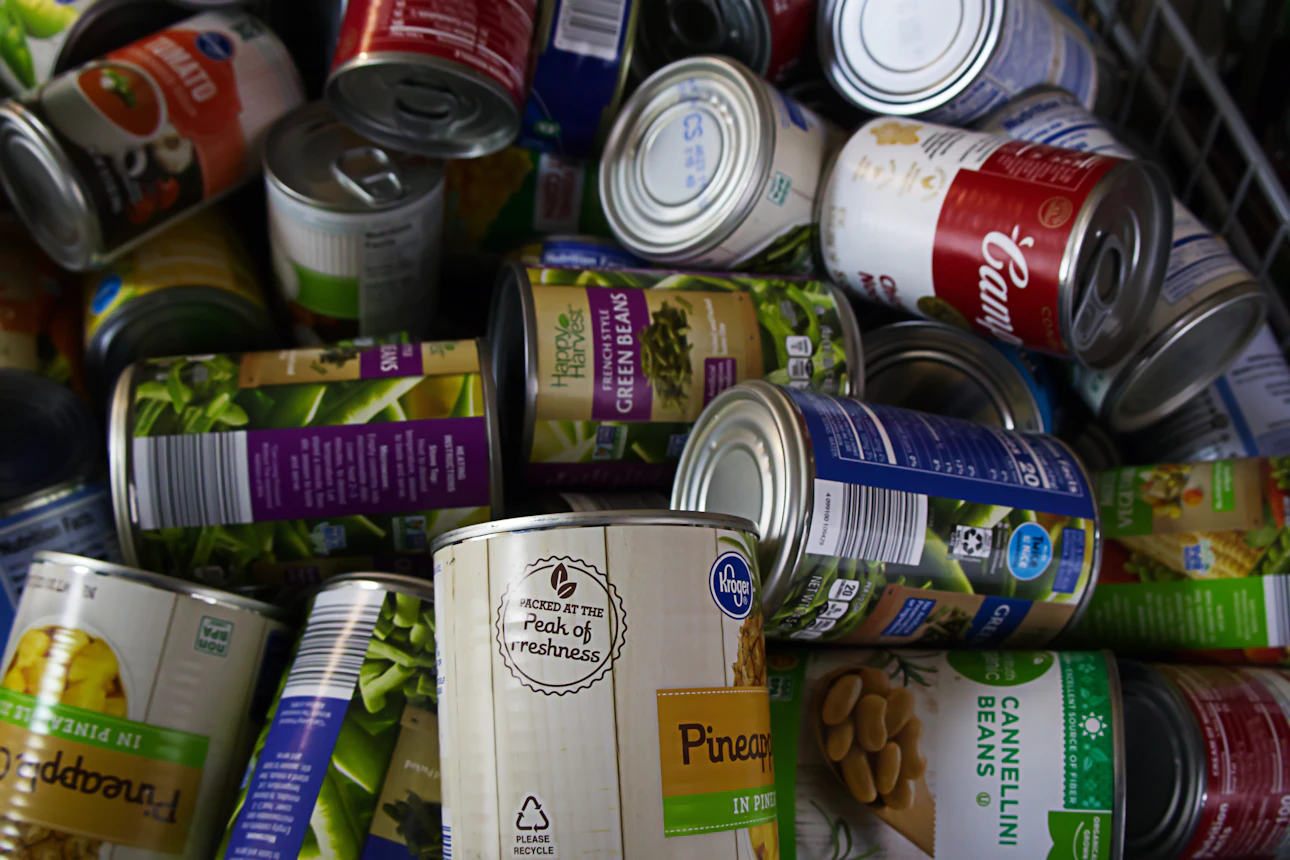
How to Tell Canned Food Has Gone Bad
This is the most important section on this page. Read it even if you skip everything else.
Unlike honey or sugar, a compromised can is more than a quality problem: it can host Clostridium botulinum, the bacterium behind botulism. Botulism is rare in commercially canned food specifically because modern commercial canning is designed around killing it, but the risk is real enough, and severe enough when it does happen, that the standard guidance from USDA’s Food Safety and Inspection Service (FSIS) is blunt: if a can shows any of the signs below, throw it out without opening it, tasting it, or trying to salvage what’s inside. Botulism toxin can be present without any visible sign in the food itself, and you cannot see, smell, or taste your way to a reliable “it’s probably fine.”
Discard the can (unopened, untasted) if you see any of the following:
- Bulging or swollen ends. A can that bulges on either end (or both) is building internal pressure, almost always from gas-producing bacteria. FSIS guidance is direct on this one: don’t use any swollen cans: discard them.
- A deep dent, especially on a seam. FSIS defines the dangerous kind specifically: a dent deep enough that you can lay your finger into it. A dent on or near a can’s seam is worse than the same dent on a flat side, because it’s more likely to have compromised the seal itself. Small, shallow dents on the body of the can are generally not a safety concern.
- Rust. Light surface rust you can wipe off with a dry cloth isn’t automatically a discard signal. Heavy rust, especially rust that’s created pinholes in the metal, is: discard those cans without opening them. And if you do open a can and find any rust on the inside, don’t eat what’s inside, even if the outside looked fine.
- Leaking, or liquid that spurts when opened. Any sign the can has been leaking means air (and whatever’s in it) has gotten in. If liquid or foam spurts forcefully out when you open a can, that’s a specific, serious warning sign: stop immediately and discard the entire can and its contents without tasting.
- A foul odor the moment it’s opened. Trust your nose before anything else. This should be obvious and immediate, not something you have to convince yourself of.
- Cloudy or milky liquid that should be clear, or foam inside the can that shouldn’t be there.
If you see any single one of these signs, the entire can gets thrown away: never tasted “just to check,” and never fed to pets either, since botulism toxin doesn’t discriminate by species. This is the one place in this whole series where “when in doubt, throw it out” is the literal, correct food-safety instruction.
On botulism specifically
Botulism symptoms typically show up 12 to 48 hours after eating contaminated food, and can include blurred or double vision, difficulty swallowing or speaking, and (in severe, untreated cases) respiratory failure. It’s a medical emergency, not a “wait and see” situation. The good news: modern commercial canning processes are specifically engineered to destroy botulism spores, which is why documented cases from commercially canned food are rare in the U.S. The risk is meaningfully higher in improperly home-canned low-acid foods (green beans, corn, beets, and similar low-acid vegetables are the classic risk category) processed without following tested, science-based canning procedures: pressure-canning at the correct time and temperature is what kills the spores for low-acid foods; a boiling-water bath alone isn’t sufficient for them.
What’s not a spoilage sign:
- A “best by” or “use by” date that’s passed, with no other warning signs present. This is a quality date, not a hard safety cutoff, for commercially canned goods.
- Minor discoloration of the label from age.
- A shallow, cosmetic dent well away from either seam.
High-Acid vs. Low-Acid: Why Shelf Life Varies So Much
This is the single most useful fact in this article, and it’s the one most generic “canned food lasts forever” advice leaves out: not all canned food ages the same way, because acidity itself is part of what keeps it stable.
| High-Acid Canned Foods | Low-Acid Canned Foods | |
|---|---|---|
| Examples | Tomatoes and tomato products, fruit, pickled vegetables, juices | Most vegetables (green beans, corn, peas, carrots), meat, poultry, fish, soups, stews, beans/legumes |
| Best-quality shelf life | 12–18 months | 2–5 years |
| Why the gap exists | Higher natural acidity is itself mildly inhibiting to spoilage organisms, but that same acidity slowly reacts with the can’s interior over time, degrading flavor and texture faster | Lower acidity is more hospitable to spoilage organisms if the seal ever fails, which is exactly why low-acid canning requires more rigorous processing, but once properly sealed, low-acid contents hold their eating quality noticeably longer |
| Safety after the “best quality” window, if undamaged | Still generally safe per USDA guidance: expect flavor, color, and texture to be noticeably past their best | Still generally safe per USDA guidance: often holds up better past its window than high-acid food does |
Practical takeaway: if you’re building a long-term stockpile and want to minimize how often you’re rotating stock, low-acid staples (canned meats, beans, soups, most vegetables) are the better anchor items. High-acid foods like canned tomatoes and fruit are still worth stocking, but plan to rotate and use them on a shorter cycle, closer to 1–1.5 years, if you care about eating them at their best rather than just “still technically fine.”
Storage Conditions: Pantry, Bulk Storage, and Rotation
Ideal storage environment
A cool, dry, dark space in the roughly 50–70°F range is the standard target for canned goods. Canned food tolerates more temperature swing than something like flour or honey, but it’s not infinitely forgiving: real degradation risk starts once temperatures climb into the mid-80s and above, and sustained heat above roughly 90°F meaningfully shortens how long a can holds its best quality. Freezing is the other extreme to avoid: a can that freezes can expand enough to strain or rupture the seam, and thawed contents in a previously-frozen can should be treated with extra suspicion for exactly that reason.
This is why a garage, uninsulated shed, or attic is a genuinely bad long-term home for canned goods. Even in a climate that isn’t extreme, those spaces routinely swing well outside the 50–70°F band across a year. An interior closet, basement, or dedicated pantry space that stays closer to a stable indoor temperature is a real upgrade for a stockpile you’re planning to hold for years.
Shelf storage vs. long-term bulk storage
For everyday kitchen use, a standard pantry shelf is fine. For a genuine multi-year prepper stockpile, a few things are worth doing differently:
- Keep cans off a bare concrete floor, especially in a basement: concrete can hold moisture and transfer cold, and a can sitting directly on it is more exposed to condensation-driven rust on its bottom seam.
- Store cans label-side visible and organized by date, not stacked in a way where you can’t tell what’s in the back without digging everything out.
- Don’t stack cans more than a few layers deep without support. The weight of cans stacked directly on top of each other, especially in cardboard cases stored for years, can create slow, low-grade dents and seam stress at the bottom of the stack.
FIFO rotation
First in, first out is the entire discipline here: new cans go to the back of the shelf, older cans move to the front and get used first. Writing the purchase year on the lid with a marker, or organizing shelves by month/year purchased, makes rotation something you can do without relying on memory.
If you keep a lot of cans, a tilted can rack does the rotating for you: new cans go in at the back and the oldest roll to the front. The Vrisa 7-tier can rack holds up to 84 cans. Buyer reviews are mixed on assembly, so start every screw before tightening any of them. (Affiliate link: I may earn a commission.)
Inspection schedule
Even a well-stored can can develop rust or a slow dent over years. Building a habit of visually checking your stockpile every few months (not opening anything, just scanning for bulging, new rust, or dents you don’t remember) catches a compromised can while you can still just discard it.
Common Mistakes
- Storing the stockpile in a garage or attic “because there’s more room out there.” Probably the single most common mistake with canned-goods prepping: convenient storage space that also happens to be the worst environment for long-term can integrity.
- Ignoring a swollen can “because it’s probably fine.” A bulging can gets thrown away, full stop, no exceptions for “well, it’s only slightly puffy.”
- Never rotating stock, so the oldest cans, the ones most likely to have quietly developed rust or a dent, are also the ones sitting untouched the longest.
- Stacking cans carelessly, creating slow seam-stressing dents at the bottom of a tall stack without realizing it.
- Treating the “best by” date as a hard safety expiration, and either throwing out perfectly good food early or, worse, assuming a date that’s passed means nothing at all and skipping the actual can inspection.
- Tasting a can “just to check” when something seems off. If any of the real spoilage signs are present, the correct response is discarding the can, not a taste test.
- Storing cans directly on a damp concrete floor without a shelf or rack, inviting slow bottom-seam corrosion that’s easy to miss.
Free Updates
I send an email when something’s genuinely worth your time: a new guide, a real price drop on something I recommend, or an actual safety alert. No spam, no daily digest, unsubscribe anytime.
FAQ
Is it true that canned food lasts indefinitely if the can isn’t damaged?
Largely yes, on the safety side: per USDA guidance, canned food generally remains safe indefinitely as long as the can shows no signs of damage (no bulging, deep dents, rust, or leaking). But safety and quality are separate clocks. Flavor, color, texture, and nutritional value decline over time even in a perfectly intact can.
What does a bulging or swollen can mean, and is it really about botulism?
A bulging can means gas is building up inside: almost always from bacterial activity, which can include, though isn’t limited to, Clostridium botulinum. USDA guidance is unambiguous: don’t use any swollen can, discard it. You can’t tell from the outside whether a given bulging can specifically carries botulism risk versus a less dangerous spoilage organism, which is exactly why the guidance doesn’t ask you to guess. Every bulging can gets the same treatment, discarded unopened.
How long do canned vegetables, meat, and soup last?
These fall into the low-acid category and hold their best quality for roughly 2 to 5 years at proper room-temperature storage, per USDA figures. Safety extends beyond that window as long as the can stays undamaged.
How long do canned tomatoes, fruit, and pickled foods last?
These are high-acid and have a shorter best-quality window, roughly 12 to 18 months, even though the same “safe indefinitely if undamaged” logic technically still applies.
Is home-canned food as shelf-stable as store-bought canned food?
Not in the same way. Home-canned food’s safety depends entirely on whether the person canning followed a correct, tested process: pressure-canning at the right time and temperature for low-acid foods specifically. General guidance gives home-canned goods roughly a 12-month best-quality window, and low-acid home-canned vegetables in particular carry real, documented botulism risk when processing wasn’t done correctly.
Can I store canned goods in the garage for a long-term stockpile?
It’s not ideal. A garage typically swings well outside the roughly 50–70°F target range across a year, and both extremes shorten how well cans hold up, with sustained heat being the bigger long-term risk. An interior closet, basement, or dedicated indoor storage space is a meaningfully better choice.
The Prep Verdict is reader-supported. If you buy through a link on this page, I may earn a commission at no extra cost to you. See my full disclosure for details. I only recommend products I’d put in my own emergency supplies.